 Margen
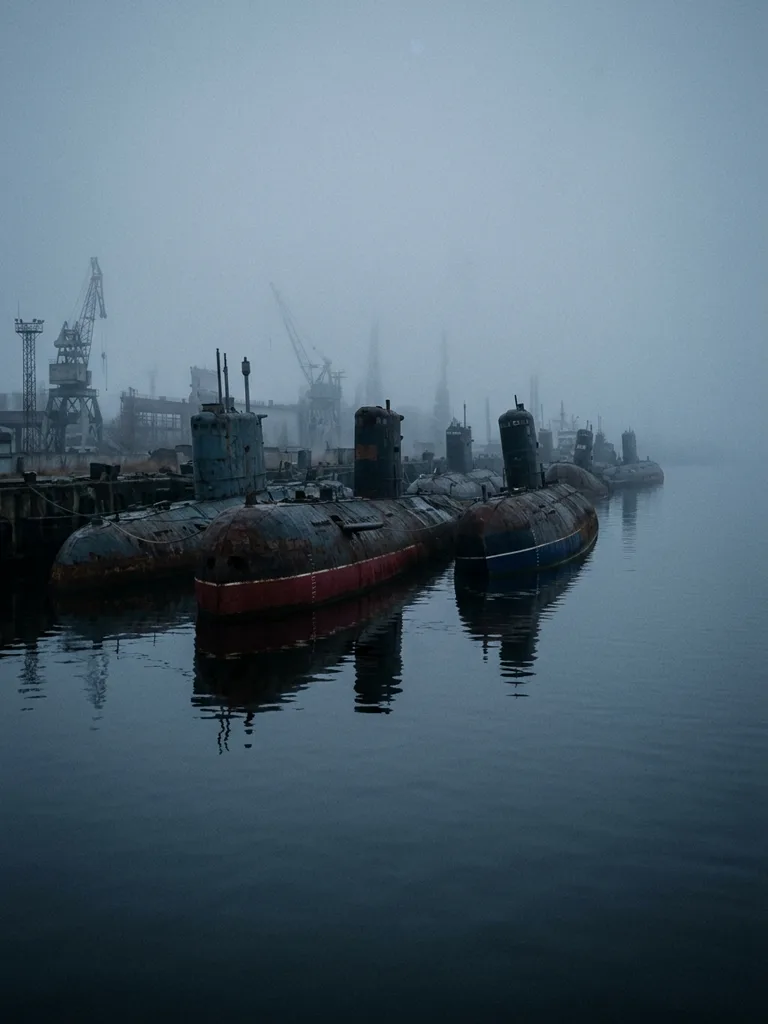
In 1989, Pepsi, the American soft-drink brand, accepted 17 aging Soviet submarines as payment. The deal also included a cruiser, a frigate and a destroyer. The company resold those vessels as scrap through a Norwegian firm, so they never fought and never sailed under its flag.
That is the verifiable story behind a far flashier legend: the claim that a beverage company once owned the sixth most powerful navy in the world. The line thrives online because it joins two things hard to picture in the same transaction: cans of cola and military submarines. The trouble is that it turns a form of payment bound for the scrapyard into an operational naval force.
The relationship had begun thirty years earlier, without a single ship. In 1959, Moscow hosted the American National Exhibition, a trade show staged at the height of the rivalry between the blocs, and there Donald Kendall, who ran Pepsi's international business, crossed paths with the Soviet leader Nikita Khrushchev.
That day also produced the so-called kitchen debate: Khrushchev and the American vice president Richard Nixon argued in public beside a model kitchen. Kendall got the Soviet leader to drink a Pepsi in front of the cameras, and the image was worth more than any ad campaign: the most powerful man in the USSR tasting an American product in Moscow.
The photograph did not deliver a market overnight, but it laid the groundwork for a business relationship that would bear fruit. Kendall wanted to place his drink in a country where Western consumer goods barely entered, and then only as an exception. His chance came in 1972, when Pepsi became the first Western consumer product manufactured and sold inside the Soviet Union.
Selling there posed an elementary obstacle. The ruble, the currency of the Soviet economy, was not convertible. The company could move soft drinks, but it could not take in rubles and later exchange them for dollars to carry home to the United States. An ordinary sale stopped being ordinary at the exact moment of getting paid.
The solution was barter. The Soviet side paid with Stolichnaya vodka, a distilled spirit of Soviet production, and the American company gained the right to resell it in its own country. In went concentrate and the technology to make soda; out came bottles of vodka with commercial value in a market where they could actually be turned into usable revenue.
There was no international currency hidden between the two products. One drink paid for the other. The operation depended on the vodka received finding buyers and offsetting the value of the Soviet business. That formula sustained the relationship for years, but expanding the brand's presence meant finding goods capable of covering a larger exchange.
Barter also had an obvious ceiling. The brand could grow in the USSR only as fast as the vodka sold in the United States, because every bottle shifted there was, in practice, payment collected for a soda served in Moscow. Scaling the business up called for a payment of another size, and the Soviet side still had no convertible currency to offer. What it did have, moored and aging at its bases, was steel.
In 1989 the ships appeared. The 17 submarines were not a naval purchase conceived for patrolling, arming itself or joining any war. They were old units handed over inside a commercial agreement. The cruiser, the frigate and the destroyer were in the same position: their economic destiny was metal, not the sea.
The Norwegian firm that handled the resale made it possible to turn the vessels into scrap and that scrap into usable value. Throughout the process, Pepsi stood between the Soviet side that was paying and the buyer who would break the ships apart. That middle position is enough to say it received a fleet, but not to credit it with a navy.
It helps to picture the scene without epic. Decommissioned submarines waiting for a tow, with no crew to board them and no mission to fulfill, the scrapyard's cutting torch the only destiny written down for them. The value of that “fleet” was measured in tons of recoverable steel, and whoever bought it was buying raw material by weight.
Donald Kendall summed up the strangeness of the deal with a joke aimed at Brent Scowcroft, the U.S. national security adviser: “We are disarming the Soviet Union faster than you are.” The quip worked because it described the material's fate literally. While governments negotiated over armaments, a soft-drink company was sending old Soviet ships off to the scrapyard.
It also explains why the anecdote outlived the details. A line about a multinational disarming a superpower fits in a headline. The real operation requires remembering the ruble's lack of convertibility, the vodka barter and the ruinous condition of the vessels. Strip those pieces away, and a scrap-metal liquidation looks like a transfer of military power.
The business still aspired to grow. In 1990 a deal was announced worth 3 billion dollars, with more plants and the arrival in Moscow of Pizza Hut, the American restaurant chain. The size showed how far a relationship begun with a photograph in 1959 had come.
But the agreement depended on a political and economic structure that was about to vanish. The Soviet Union dissolved in 1991. With it died the framework that made that giant exchange possible. The expansion plans did not survive on the agreed terms, though the story of the submarines kept circulating on its own.
The myth tends to leap from “it received ships” to “it controlled one of the world's largest navies.” Between those two phrases, what's missing is the ability to sail, a crew and a military mission. The vessels had no operational value for the company and had been transferred precisely to be resold as recoverable material. Calling them a navy is like calling a line of cars headed for the junkyard a racing fleet.
Stripped of its uniform, the story is plenty strange on its own: very few invoices have ever been settled in submarines.
Pepsi never had the sixth navy in the world. What it had, for the length of one commercial operation, was 17 old submarines and three surface ships whose only verified course was to become scrap sold by weight.