 Margen
Serialized book · From the Margen catalogue
Inside the box are seeds of an extinct pear tree
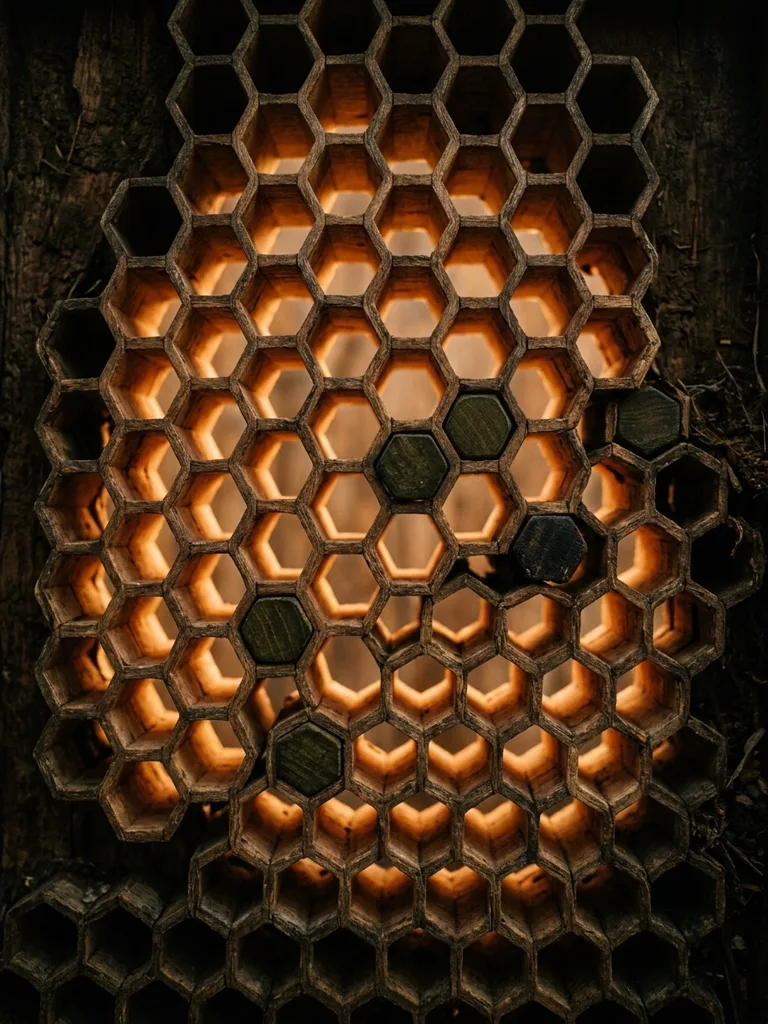
Previously: Elsa Trigo, a beekeeper, inherited 96 hives from her uncle Ovidio. Eleven have no honey: they hold numbered wooden boxes sealed with wax.
Eighty-four hives still to check and Elsa has not slept. At nine in the morning she walks into the veterinary clinic in Sorbeda with box number 1 wrapped in a jumper, held against her chest the way you carry a small animal.
Amaro Cid, district vet for thirty-one years, pushes the keyboard aside and spreads a green cloth over the examination table.
"Put it there."
"It isn't an animal."
"I can see it isn't. Put it there anyway."
The box is the size of a large brick. Unvarnished chestnut, its edges rounded from much handling, and burned into the lid a one split by a slash and an eleven: 1/11. The seal is a cord of wax running right round it, ending in a stamp flattened with a thumb.
"You opened it."
"Last night. And I taped it shut again because I was afraid of ruining something."
Amaro cuts the tape with the scalpel he uses on hooves. Inside there is none of what Elsa had imagined at four in the morning: no papers, no money, no photographs. There are seven hand-sewn cloth pouches the size of a fist, and in each one a handful of flat brown seeds with a darker tip.
"Pips," says Elsa. "Eleven hives without a drop of honey, to keep pips in."
Amaro does not answer. He tips one pouch onto the cloth, separates three seeds with the edge of his nail and holds them up to the light. He turns one over. He stays still a good deal longer than Elsa thinks reasonable.
"What is it?"
"Fetch the magnifier from the bottom drawer."
Elsa brings it. Amaro moves the lamp, turns the seed under the glass and then opens the metal cabinet at the back. He takes out a ring binder with the spine written in marker, "Fruit trees, district, 1988-1994", and turns pages to a laminated plate: four ink drawings of seeds with their measurements in millimetres beside them.
"Did your uncle ever talk to you about these hives?"
"My uncle never talked to me about anything. I found out he had ninety-six hives from a solicitor's letter, in April."
Amaro compares the seed with the second drawing. He does it three times, and on the third he sits on the wheeled stool and pushes himself back with one foot to the wall, which is what this man does when he wants to buy ten seconds.
"Do you know what a Sorbeda winter pear is?"
"No."
"Nobody under fifty does, so don't worry. It was a local variety, this district and three villages up the valley. It held on the tree through the November frosts, you picked it in December and ate it after early February. Nobody ever sold it because the skin marks if you look at it: it lived in private orchards and in no catalogue."
"You're speaking in the past."
"I'm speaking in the past. In 1994 fireblight came into the valley and the plant health order was to pull up and burn every pip fruit tree in the affected zone. I was in two of those orchards myself, with the trailer. In 1996 the Sorbeda winter pear was declared extinct: not a tree standing, not a graft in a germplasm bank, not a branch in a nursery. I've spent thirty years telling schoolchildren about it the way you tell them about the wolf."
Elsa looks at the seven open pouches on the green cloth.
"Then what is this?"
"This is Sorbeda winter pear."
Amaro turns the pouch inside out. Sewn into the lining is a strip of white cloth with something written in capitals, in indelible marker, squeezed to make it fit:
SORBEDA WINTER PEAR — 1994
"And that handwriting is your uncle's," he adds. "Ovidio signed two hundred field reports for me. I know it better than my own."
He stands, puts the binder back in the cabinet and locks it, which he has never done in front of her before.
"Elsa, listen to me. You have there seven pouches of something this country gave up for dead thirty-two years ago, and up on your hill there are ten more boxes unopened. Give me a number, it's the only thing I need in order to sleep: how many hives did you say had no honey?"
"Eleven."
"Eleven boxes." Amaro puts on his coat, and it is ten in the morning in July. "Eleven varieties were burned in this district."