 Margen
Serialized book · From the Margen catalogue
A Prescription Signed by a Doctor Two Years Dead
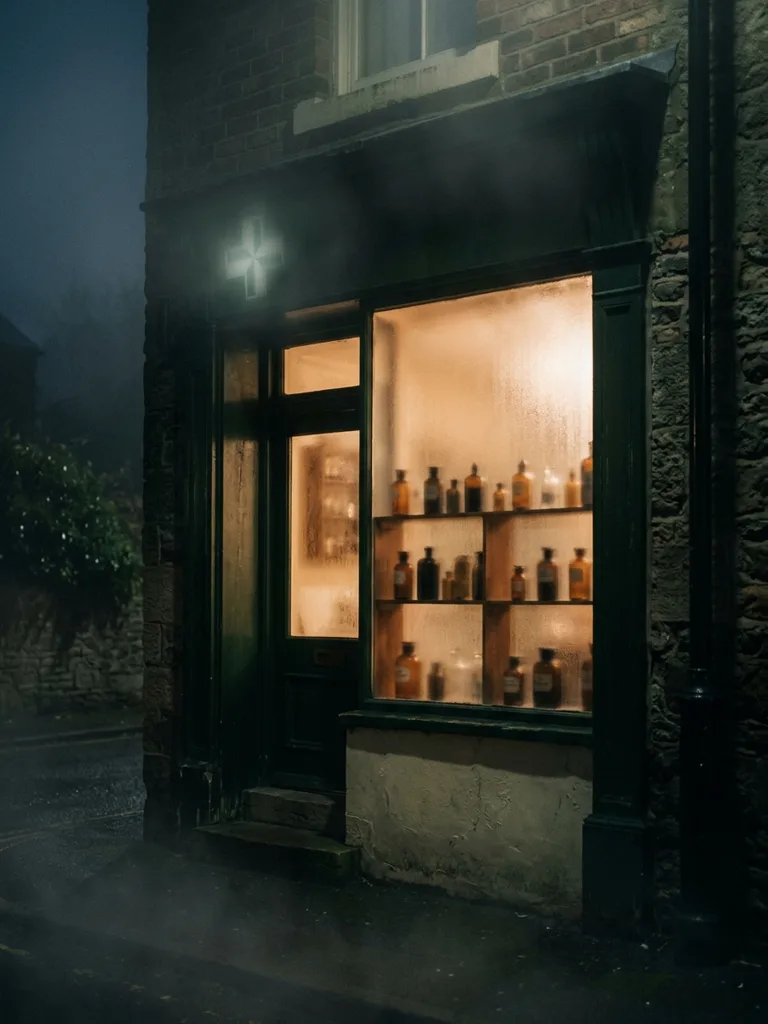
On Tuesday, with the shutter still half raised, Águeda Mendioroz found the envelope in the pharmacy's letterbox: inside was a prescription from Dr. Sagasti, and on the back-room calendar there were fourteen days left until the inspection.
The first no longer surprised her. Águeda has run the only pharmacy in Valdecierzo since her father passed it on to her: four hundred souls in winter, twice that at fiesta time, a wood stove lit in October, and a walnut counter with two centuries of elbows worn into it. The second wasn't new either: the letter from the health authority had arrived the Monday of the previous week, on headed paper, with a date underlined twice—the 26th—and a signature at the bottom, Petra Aldunate, pharmacy inspector. A routine review, it said. Águeda had been through three in twenty years, and all three had lasted a morning and two cups of coffee.
What didn't add up was the sum. Because Dr. Braulio Sagasti, who for thirty-one years saw patients at the Valdecierzo village surgery and wrote prescriptions in a hand that only Águeda and two other pharmacists in the district could decipher, died in March 2024. Águeda went to the funeral; half the village went to the funeral; the Medical Association struck off his number, 31.0448, that same week. And ever since, every few weeks, someone drops an envelope with no return address into the pharmacy's letterbox, holding a fresh prescription signed by him.
She opened the envelope on the counter with the seal knife. Official prescription-pad paper, the real thing: the rough weight of it, the red numbering in the corner, the space for the health center's stamp and, in the stamp, the half-spent violet ink of the village surgery. The regimen, written in that old doctor's shorthand: digoxin, one tablet a day, thirty days, Balbina Ochandiano. Balbina is eighty-four, kept livestock until her knees said no more, lives alone in the upper part of the village, and has taken that heart pill, at that exact dose, since 2019. Sagasti adjusted the dose himself while he was alive, three visits in a row through one bad winter. Águeda knows because she was on the other side of the counter all three times.
The dead man's first prescription came two years ago, four months after the funeral, and Águeda filled it without thinking: it looked correct, it looked like Sagasti's, and her brain asked for nothing more. By the time the date sank in it was Friday and Balbina had already started her box. More have come since. She keeps them all in a blue folder, in the second drawer of the back room, bound with a rubber band, and every time one arrives she tells herself it's the last that will cross her counter. Then she looks at the name. It is always one of the village's old people, always someone who lives alone, always a chronic regimen she has known for years: the heart one, the sugar one, the blood-pressure one. Valdecierzo has had no doctor since the surgery closed: the post has gone unfilled for two years and the district doctor sees patients twenty-two kilometers away, two mornings a week, without knowing anyone by name. An electronic prescription doesn't come down from the system on its own: someone has to sit, open the patient's file and renew it, and that someone, two mornings a week, doesn't stretch to eleven villages. Paper is the exception route. In this district, the exception is the landscape.
Mid-morning, a knuckle rapped on the glass. It was Simón Goñi, the baker, his van double-parked and a loaf under his arm—Águeda's, which she leaves paid for by the week. He pushed the door open just enough to lean his head in.
"Shall I get the upper-village order ready for Thursday?" Águeda asked, over the counter.
"For Thursday. And set Balbina's aside—this week I'm taking her bread right up to her door: the knee again." He left the loaf beside the cash register. "Everything all right, apothecary? You've got your stocktaking face on."
"Stocktaking, that's exactly it," she said, and her hand, of its own accord, covered the envelope.
Simón went off on his rounds. Águeda stood looking at the door for a long while. The Thursday round was something the two of them invented three years ago, with no paperwork: she prepares the weekly pill organizers for the old people of the upper village, those little boxes with the days of the week and the doses laid out in order, and Simón carries them up with the bread, because the bread goes up every day and the old people come down less and less. In the district they call it "Águeda's round." At the health authority's management office they don't call it anything, because on paper it doesn't exist.
All of that, until last week, was a problem she could live with from Monday to Saturday. The inspector's letter turned it into something else. Because every one of those prescriptions has been dispensed, logged and billed to the system under its serial number, and the registration number that signs them belongs to a man buried in the cemetery up the hill. On the 26th, Petra Aldunate is going to sit down in the back room with the prescription ledger and the computer, she is going to cross-check the lists, and Águeda is going to have to explain why her pharmacy has spent two years supplying medication in the name of a ghost with a rubber stamp.
She slid the bolt, put up the "back in ten minutes" sign and took the prescription into the back room. From the blue folder she pulled the oldest one, the one from two years ago. From her father's archive, where the things nobody keeps are kept, she pulled a third: a prescription from 2019, the old kind, which Sagasti had signed in front of her one clinic Tuesday, with Balbina sitting in the rush-seated chair complaining about the price of animal feed. And from the printer, still warm, the Medical Association record sheet with the doctor's digitized signature, the one on file in the official register since 1993.
She cleared the glass of the inner door, the one that lets light into the dispensary, and held the papers up against it, one over another, with the steady hand of someone who weighs out milligrams. The 2019 signature over the one on the record sheet: they fell together. The one from two years ago over 2019's: together. Today's over all of them: the same opening stroke of the S, long, with a hook at the bottom; the same i with no dot above it and the dot planted far off to the right, where nobody puts dots; the same ending that dips and climbs again in a single stroke, without lifting the pen. Stroke for stroke, curve for curve, without one tremor to give them away.
Águeda stood there with the four papers in her hand, listening to the half-raised shutter knocking in the wind. She had walked into the back room with a suspicion the size of a fine: someone in the village was forging a dead man's signature, badly, out of desperation, and she would have to put a stop to it. What the light through the glass had just left in her hands was something else: Dr. Sagasti’s authentic signature, set down on paper this very Tuesday, two years after his burial. She returned the prescriptions to the blue folder, noted today’s date in the corner and crossed off the first day on the inspection calendar: thirteen days left.