 Margen
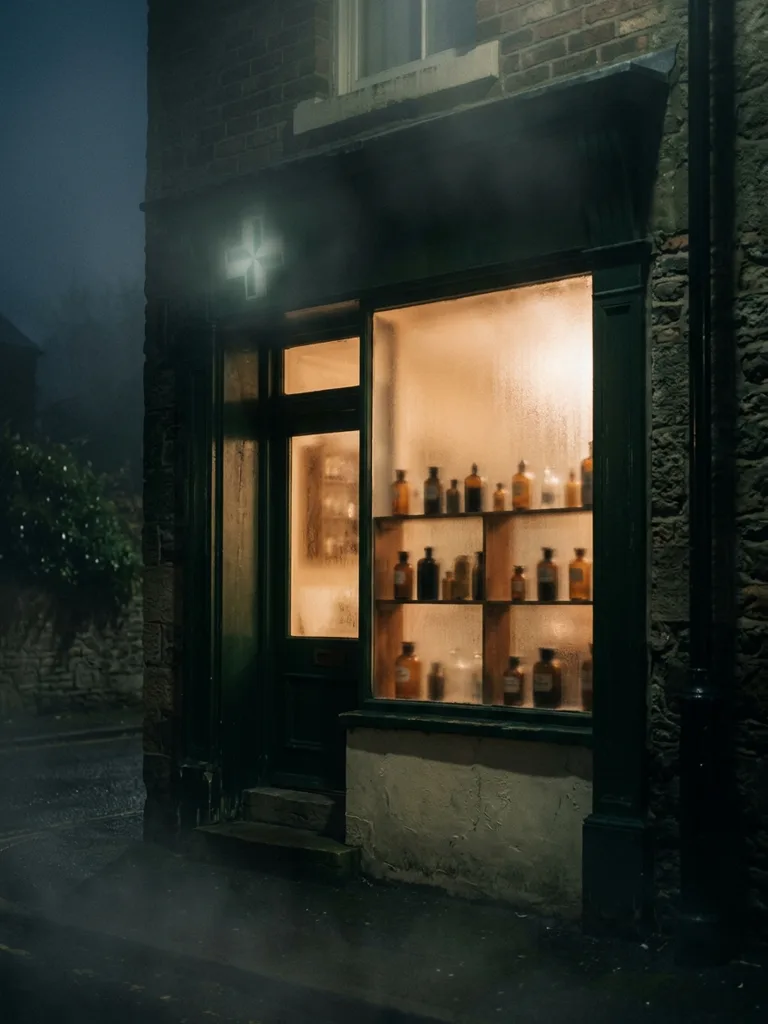
Previously: someone in Valdecierzo is signing with the genuine signature of Doctor Sagasti, dead since 2024. The College recorded the prescription pads as destroyed. Eleven days to go.
Balbina Ochandiano, a retired stock farmer of eighty-four, set the digoxin box face up on the counter at ten past nine so the batch number could be seen.
"This one only lasted me till Wednesday," she said. "The last one got me to Friday. And I don't take them by the handful."
"They changed the packaging in June." Águeda Mendioroz, the licensed pharmacist of the village's only chemist, turned the box round and copied the number onto a slip of paper. "Twenty-eight tablets now; it used to be thirty. Two days less every month."
"Then tell whoever needs telling."
"They've been told since July. Come on Thursday and I'll have your pillbox made up."
Balbina leaned on the new walking stick she dislikes because it clacks on the flagstones, and left without buying anything else. She has lived alone up in the high quarter since she was widowed, in a house with two flights of stairs, and Simón Goñi, the baker, carries her bread up on Thursdays.
Águeda bolted the counter gate and took the blue folder out of the second drawer in the back room. Thirty-one prescriptions signed by a doctor who died in March 2024. Three days earlier she had sent the area management the list they had asked her for, registered post with proof of delivery, and in the same envelope she had asked for one precise thing in return: the detail of the destruction report for the doctor's prescription pads.
While she waited for an answer she copied all thirty-one onto a sheet of squared paper, in date order. Then she copied them again by name, because writing by hand shows you things a screen lets slide past. When she finished the second sheet she counted the different names.
Eleven.
Celedonio Baraibar, a former sheep shearer, five prescriptions. Balbina Ochandiano, four. Anselma Redín, a retired schoolteacher, four. Eleven names for thirty-one prescriptions, and every one of them a renewal of the same thing — the anticoagulant, the digoxin, Anselma's insulin — every three or four weeks. Not a single new medicine in two years.
Beside each name she wrote the year of birth. She had them to hand in the dispensing file, because the chemist's makes up the weekly pillboxes for half a dozen houses in the village. The youngest of the eleven was born in 1951. The oldest in 1938.
Not one of them was under seventy-five.
She added a third column with the red pen she uses for pricing: who lives with whom. Anselma, alone since they took her brother to the care home in Tafalla. Celedonio, alone. Balbina, alone. She went down the whole list with her finger and never once had to write anything else.
Eleven names. Eleven houses with one person in them.
Anselma Redín comes into the chemist's the first Monday of every month and always asks the same thing: whether they are going to put the price of insulin up. Águeda has been taking her pillbox up since the winter, and she has those houses written down in the delivery book, with a small note in the margin saying what time it is best to ring before going up. All eleven are in that book. Not one of the other thirty-odd.
Valdecierzo has forty-odd chronic patients on electronic prescriptions and more than half of them live with someone: couples who have grown old together, a son who stayed on with the farm, a daughter-in-law who comes down for both their medicines. Not one of those was in the blue folder. Whoever was signing those prescriptions was not scattering them at random around the village: they were choosing house by house, and always the same kind of house.
Águeda underlined the column twice and sat with her pen in the air until a lad came in for plasters.
Marcial Beloki, a billing officer at the health area management, rang the back-room landline at twenty to one with the file open in front of him.
"I have two papers here and I'll tell you now they don't say the same thing," he began. "The first is the record of removal of material from the surgery, 12 April 2024. List of what was taken out, secretary's signature, received-and-signed. Two pads of official prescriptions, with their serial numbers."
"I've seen that one," said Águeda. "It's pinned up in the consulting room, on the back wall."
"Well, that's the one that closed the file. When you asked me the other day, I looked in here, I saw the record with the signature, and I told you what the file says: removed and destroyed."
"And the surgery stamp? On the record pinned up in the consulting room, the line for the stamp was left blank."
"There I can't help you. In my file there's no stamp, not coming in and not going out. And there was one, because I've seen papers from that surgery with a stamp on them."
"And the second paper?"
Marcial took a moment. She heard him turning pages.
"The second is the delivery note from the clinical waste contractor, the firm that runs the route with the van. Collection of 18 April 2024, Valdecierzo stop. In the observations line, written in biro by the driver: no material."
"No material."
"No material. The van stopped at the surgery, somebody signed the running sheet for the driver, and it left without taking a thing. And the destruction certificate I have in the file is the one for that route, but it goes by lots and by weight: it doesn't list serial numbers. In two years nobody crossed one paper with the other, because the record came with a signature, and a signed receipt closes a file."
"And what do you do with this now?"
"Now I open an incident report about the delivery note, today, and it goes into the file in writing. I'm telling you so it doesn't catch you cold. What you have in that folder isn't a dead man's odd signature any more: it's two pads of official prescriptions recorded as burned that haven't been."
Águeda already had the blue folder open on top of the till.
"Marcial, read me the serial numbers on the record."
He read them out slowly, twice, eight digits each. Águeda followed them with her finger along the top corner of the first prescription, Celedonio's, and along number twenty, and along number twenty-one, which already came from the second pad.
Before hanging up she counted the sheets again, in case the number had changed since the morning. Thirty-one: twenty from the first serial and eleven from the second. Somewhere in the village there were nine blank sheets left.
The two pads the College has recorded as burned for the last two years are printed thirty-one times over in the blue folder on her counter. The van left Valdecierzo on 18 April with its running sheet signed and not one box inside it.