 Margen
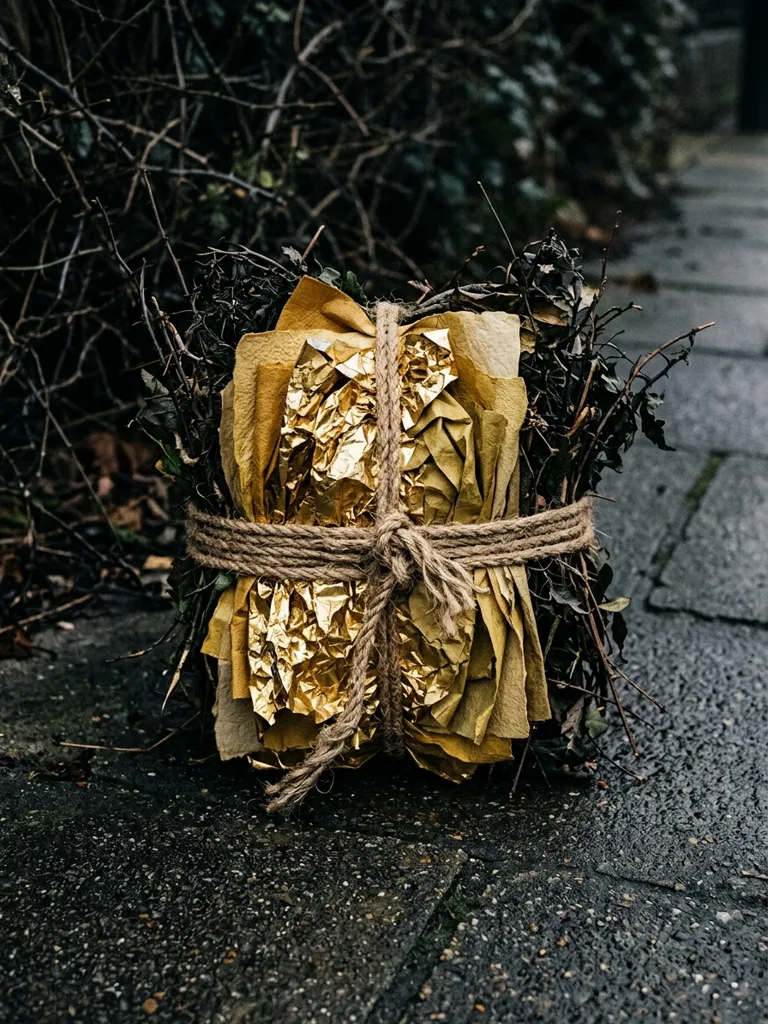
20 March 1966, Westminster: the Jules Rimet Cup, the trophy given to football's world champion, vanishes from a display case; seven days later, Pickles will find it on a walk. London is preparing for the World Cup and has placed the trophy in Sport with Stamps, a philatelic exhibition held at the Methodist Central Hall. Football's most closely guarded object ends up surrounded by stamps that are worth, all together, a great deal more.
The show is closed to the public because it is Sunday. A religious service is being held on the floor below. There are uniformed guards, plain-clothes officers and one person assigned to the case, though the watch does not cover every minute. Between eleven in the morning and ten past twelve, someone forces a back door, opens the catch of the cabinet and takes the trophy. The stamps stay where they are. The thief has chosen the famous object and ignored the expensive haul.
The police go over the building and get a not very useful description: a slim man of about thirty, hair combed back, possibly a scar. The Football Association, the governing body of English football, had custody of the trophy before the tournament. Now it has to explain to the world that it has lost the main prize four months before handing it over. A guard sums up the security with impeccable logic: everything had worked, except that the cup had been stolen.
21 March 1966. Joe Mears, chairman of the Football Association and of Chelsea, takes a call. He is told to collect a parcel left at Stamford Bridge, the London club's ground. Inside is a detachable piece from the top of the trophy and a ransom letter. The sender signs himself Jackson and demands £15,000 in small notes.
Jackson treats the gold cup as metal destined for melting. He threatens to take it to the crucible if Mears tells the police. Mears tells the police. From that moment he answers under their instructions and places an agreed advertisement to signal that he accepts the terms. The blackmailer thinks he is negotiating with a football official; in fact he is starting to write out his itinerary for a squad of detectives.
24 March 1966. The meeting is set near Battersea Park, a park on the south side of the Thames. Mears does not go. Inspector Len Buggy, a Metropolitan Police detective, turns up under the name McPhee and pretends to be his assistant. He carries a suitcase that appears to hold the £15,000. There are only £500 in real notes; underneath, newspaper has been packed in.
The man using the name Jackson gets into the false assistant's car and asks him to drive. Along the way he spots the police vehicle following them. He orders a stop, gets out and runs. The chase does not last long. The officers arrest Edward Betchley, a used-car dealer with a record, but the trophy is not with him.
Betchley maintains he was acting as a middleman for someone he knew only by a nickname. The police never find whoever actually took the cup. Betchley will be sentenced to two years in prison for demanding money with menaces. Before he learns his sentence he still finds room to ask that England win the World Cup. The accused cooperates with the sporting calendar rather more than with the investigation.
25 and 26 March 1966. False tips, phone calls and supposed leads come in. The search mobilises Scotland Yard, the traditional name of the Metropolitan Police, and fills front pages inside and outside the United Kingdom. The trophy is barely over thirty centimetres tall and can be hidden in an ordinary bag. The most recognisable object of the tournament becomes hard to recognise when nobody knows where to look.
27 March 1966. David Corbett, a Thames docks worker, leaves his house on Beulah Hill, a street in Upper Norwood, south London. He wants to get to a phone box to ask whether his brother has become a father yet. He has Pickles with him, a black and white mongrel collie, four years old.
Pickles stops at a parcel tucked under a hedge, next to the wheel of a neighbour's car. It is wrapped in newspaper and tied with string. Corbett notices it weighs more than it should and fears it is a bomb. He puts it down, picks it up again and tears part of the wrapping. A metal base appears with names engraved on it: Brazil, Germany, Uruguay.
Corbett goes indoors and announces to his wife that he thinks he has found the World Cup. Then he takes the parcel to the police station. The first reception is not equal to the find: one officer does not think it looks much like a World Cup. Verification changes the tone, and also Corbett's situation, as he goes from useful citizen to prime suspect.
The detectives question him for hours and check his movements. His name stays among those under investigation for some time before he is ruled out. The trophy is genuine. The trail the officers, the guards and the blackmailer had all failed to find turns up because Pickles needed to smell a lump on the way to a phone box.
28 March 1966. The press photographs the dog beside the parcel and the recovered trophy. Pickles becomes a national celebrity. He appears on television, opens events and receives a silver medal from the National Canine Defence League, a British animal protection organisation. The Spillers company grants him a year of free food. He also lands a part in the film The Spy with a Cold Nose, a British comedy about a spy dog.
David Corbett receives rewards of around £6,000 and uses the money to buy a house. The comparison with the champions comes later: each England player was paid £1,000 in bonuses for winning the World Cup. The find credited to Pickles brought his household about six times the individual bonus of the men who lifted the trophy at Wembley.
30 July 1966. England beat West Germany four goals to two in the final. Bobby Moore, captain of the England side, receives the Jules Rimet from Queen Elizabeth II. Pickles and Corbett are invited to the champions' banquet. Pickles is allowed to lick the plates.
19 December 1983. The Jules Rimet is stolen again, this time from the headquarters of the Brazilian Football Confederation in Rio de Janeiro. Brazil had kept it permanently since its third title, won in 1970. Investigators never recover the original and it is thought it may have been melted down. In 1966 Pickles took home about six times a champion's bonus, got a medal and ate free for a year; in 1983 what they failed to do was hire the dog.