 Margen
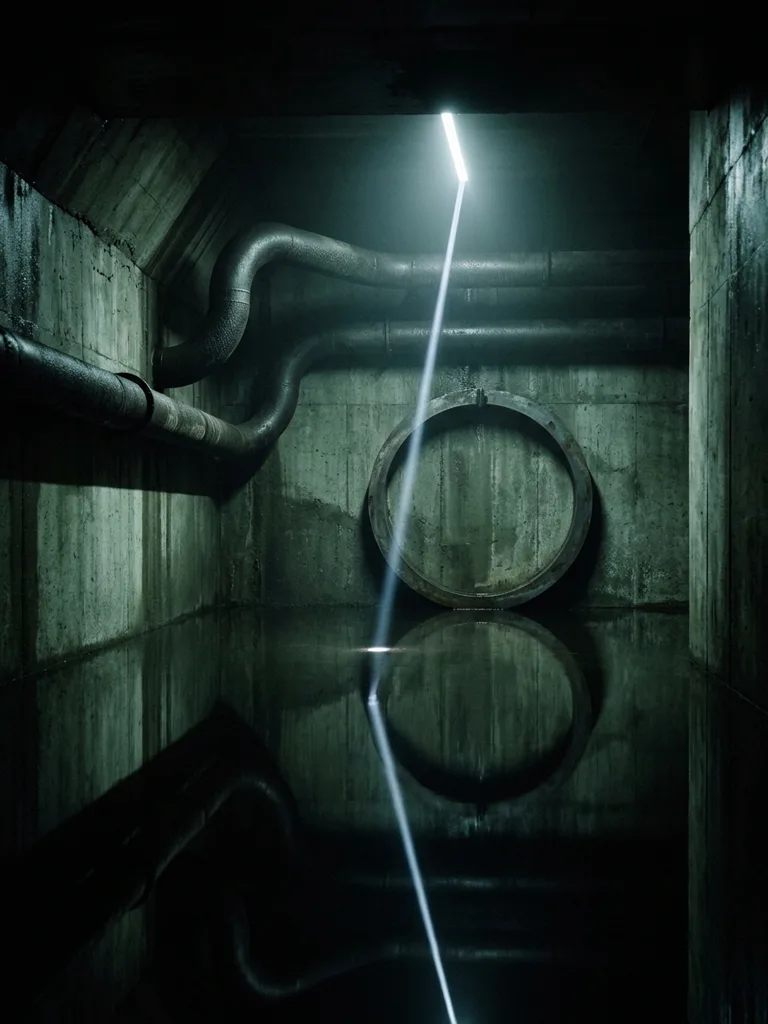
The water came up to their knees under reactor 4 at Chernobyl on 4 May 1986. Alexei Ananenko, the mechanical engineer on shift, was moving along a pipe because he knew by heart the junctions that led to two manual valves. Valeri Bezpalov, an engineer at the same plant, went with him; Boris Baranov, the shift supervisor, kept the torch aimed at the next stretch.
Ten days earlier, reactor 4 had exploded during a test and had opened the building to the air. The water used against the fire and in the emergency systems had gathered in the lower levels. Below lay the bubbler pools, large tanks meant to condense steam during a fault. The people directing the response wanted them emptied before the molten fuel sank any further. The pumps could draw the water out, but two interior valves had to open the way first.
The call reached Ananenko during his shift. He had worked on those pipes and knew where the controls were inside a space that no longer had normal lighting. The drawings showed the system; he carried the sequence of turns and branches needed to reach it from inside. The task could not be solved by operating a control in an undamaged room. Someone had to cross the lower zone and move the handwheels by hand.
Ananenko told Baranov and asked for another worker. There were two valves and he wanted two people able to operate them. Bezpalov was chosen because he too was an engineer at the plant and could follow him through the industrial layout. Baranov decided to go in with them. As shift supervisor he could have stayed upstairs coordinating, but he went down to hold the light and to help if one of the mechanisms resisted.
The preparation took place among workers who had spent days inside a nuclear emergency. They received the available information on radiation readings along the upper part of the route. They chose waterproof clothing, boots, gloves and respiratory protection to reduce contact with contaminated water and particles. They were not wearing suits capable of shielding them from all radiation. The clothing set up a barrier to come back, take off and then pass through decontamination.
Ananenko fitted two dosimeters, devices that record absorbed dose, at different heights on his body. One was to pick up exposure at the upper level and the other near the water. He also carried an adjustable spanner: if a valve resisted, they could gain leverage. Before going in, the kit gathered was short and recognisable by touch. In the damaged zone, hunting too long for a tool meant staying there longer.
They went down through service accesses towards the rooms beneath the block. The electrical installation had failed in that part of the plant and the switches did not bring the lights back. Baranov's torch cut out a piece of wall, a pipe junction or the edge of a passage; everything else stayed outside the beam. Ananenko could not see the whole route. He identified each fragment and linked it to the layout he remembered.
The floor disappeared under murky water in the flooded sectors. The firefighters had managed to bring the level down, so they did not have to swim or dive with tanks. Even so, the water reached roughly their knees where they had to pass, and it hid obstacles, gaps and debris. The word divers, used afterwards in many accounts, does not describe their movements: they wore protective clothing and respirators, and tried to stay above the water wherever the layout allowed it.
A raised pipe offered that possibility. Ananenko recalled that they moved along it, setting their feet on the metal to avoid the flooded bottom. Its diameter let them keep their footing, but it forced them to be careful with every step. Bezpalov followed the same line and Baranov adjusted the torch so the next step fell inside the beam. If the light pointed at the junction they were looking for, it left their feet worse lit; if it dropped towards their boots, the markers on the wall disappeared.
At each fork, Ananenko compared specific shapes: the run of a pipe, a joint, the entrance to another compartment. He had known the installation working, with lamps and dry accesses. Now he had to recognise it in pieces, with the water taking up the lower plane and the three men concentrating on not losing the way back. They had no glowing arrow and no rope run out to the valves. The engineer's memory ordered the junctions.
They followed the duct to the area of the controls. The valves belonged to the system that allowed the bubbler pools to be discharged. They were two manual pieces, far enough apart that Ananenko had asked for a second operator. The torch found the handwheels. The job that had required three men, protective clothing, meters and a route along pipes ended in an ordinary maintenance gesture: grip metal and turn it.
Ananenko showed Bezpalov which one he was to work. Each took a valve. The adjustable spanner was ready in case the mechanism had warped, rusted or grown too stiff, but they were able to move the controls without using it. They turned until the line opened. From where they stood, their hands could not see the water leaving the great tank; they waited for the confirmation the system itself could give them.
Then they heard the flow. The water began to run through the pipe and the noise filled the stretch where they stood. It was immediate proof that both openings had worked and that the pumps could carry on with the draining. They did not need to stay by the handwheels while the whole level went down. Ananenko fixed the place in his memory, the three reorganised their march and Baranov turned the light back towards the way out.
Going back meant repeating the same junctions in reverse. On the pipe, their bodies already carried the effort of the way in, and the wet clothing hampered their movements. They stepped down into the water when the layout demanded it and went looking for firm metal again when they could. The torch went on handing them the basement in fragments. Ananenko recognised a branch, Bezpalov kept the distance needed not to get in his way, and Baranov held the beam on both of them.
On leaving the flooded zone, the contamination checks still lay ahead. They took off the clothing used inside and went through the showers. The washing was no ceremonial gesture: the detectors were checking whether contamination remained on their bodies. Bezpalov said later that they had to shower more than once because they kept setting them off. They went back to clean water, washed and repeated the measurement until they could leave the decontamination area.
Ananenko handed in the two dosimeters to be read. The devices had travelled at different heights precisely because radiation could vary near the water and along the route. He explained years later that he did not remember an extraordinary reading when he gave them back. The mission ended administratively with those instruments out of his clothing, in the hands of those whose job was to record the workers' exposure.
The draining went on with the pumps over the following days. The opened valves made it possible to evacuate the water gathered under the reactor while other crews carried on cooling, measuring and building accesses inside the wrecked plant. Ananenko, Bezpalov and Baranov went back to the structure of shifts and tasks. They had gone in because one of them remembered the route, another could open the second control, and the supervisor decided to go with them holding the light.
For years, articles and documentaries wrote that the three had died of radiation a few weeks later; it was false. Baranov died in 2005, in his sixties, of a heart problem, while Ananenko and Bezpalov stayed alive for decades. On 26 April 2018, Ukraine awarded the three of them the Order for Courage, third class: Ananenko and Bezpalov received it in life, and Baranov's was posthumous.
Ananenko stayed connected to the nuclear sector and was able to recount the operation with his own details: the call taken on shift, the choice of Bezpalov, the two meters, the pipe used to move along, and the sound of the water after the handwheels turned. In his account he had no need to claim a farewell or a certainty of death. There was a damaged installation, a specific order and a worker who knew how to get there.
Decades later, the photographs of Ananenko and Bezpalov with their decorations showed the aged faces of two men whom many versions had given up for dead in 1986. The recognition came thirty-two years after the descent. To the journalists who asked him why he had gone in, Ananenko always gave the same answer.
"That was my job at the time," said Alexei Ananenko.