 Margen
Did you know? · From the Margen catalogue
She survived 80 minutes under the ice at 13.7 degrees
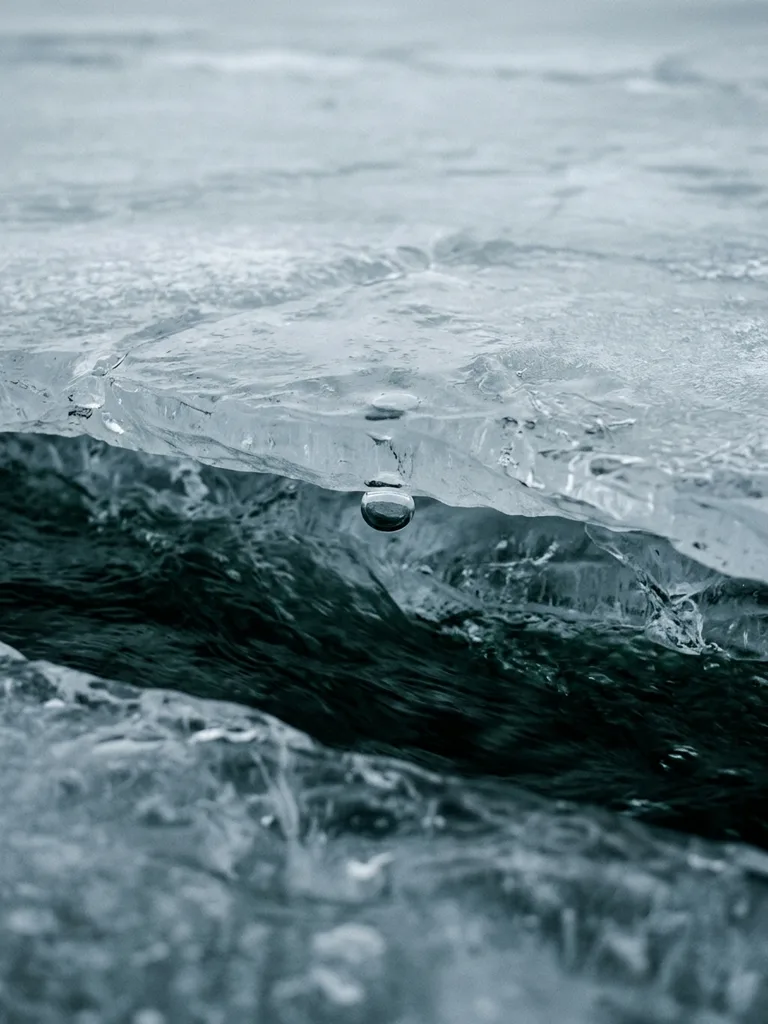
On 20 May 1999, Anna Bågenholm, a 29-year-old Swedish doctor then training as an orthopaedic surgeon at the hospital in Narvik, was skiing off-piste with Marie Falkenberg and Torvind Naesheim, two colleagues who were also doctors. Near Narvik, in northern Norway, she fell head first into a mountain stream covered by about 20 centimetres of ice and was trapped face down. She spent 80 minutes under the ice and came out with a core temperature of 13.7 degrees.
The current dragged her body until it wedged under the frozen slab, with her skis and feet above it and her head and torso submerged.
Bågenholm found a pocket of air between the water and the ice. For about 40 minutes she was able to breathe, stay conscious and struggle to get out. Falkenberg and Naesheim held her by the skis so the current would not take her while they called for help, but her body was wedged in and the ice also had to hold the weight of the people trying to reach her. When the air ran out, she lost consciousness and her heart stopped. The rescue team cut a hole downstream, worked their way to her and managed to free her.
When they pulled her out, Bågenholm had no pulse and no breathing, her pupils were dilated and she was still in cardiac arrest.
She was flown for an hour by helicopter to the University Hospital of North Norway, in Tromsø. There her circulation was connected to a machine that drew out her blood, warmed it outside her body and returned it. More than a hundred people worked in shifts through some nine hours of resuscitation and rewarming. Her heart started beating again during that process.
The cold that was shutting down her organs was also cutting the brain's oxygen consumption by roughly 6 per cent for every degree it dropped. At 37 degrees, five minutes without circulation can destroy it. In Bågenholm's case the cooling had happened before her heart stopped, so the brain tissue was already working far more slowly when it stopped receiving blood.
Mads Gilbert, a doctor on the Tromsø team, and his colleagues published the case in The Lancet in 2000.
The case reinforced a rule of mountain medicine: a person with hypothermia is not considered dead until they are warm and dead. Even if an extremely cold body has no detectable pulse, rewarming and resuscitation must continue before anyone declares that recovery is no longer possible.
Bågenholm spent ten days in a coma and around two months in intensive care. A nerve injury left her at first with almost no movement in her hands and feet, but she recovered nearly all of it.
Afterwards she went back to work as a radiologist at the same hospital in Tromsø where she had been rewarmed.