 Margen
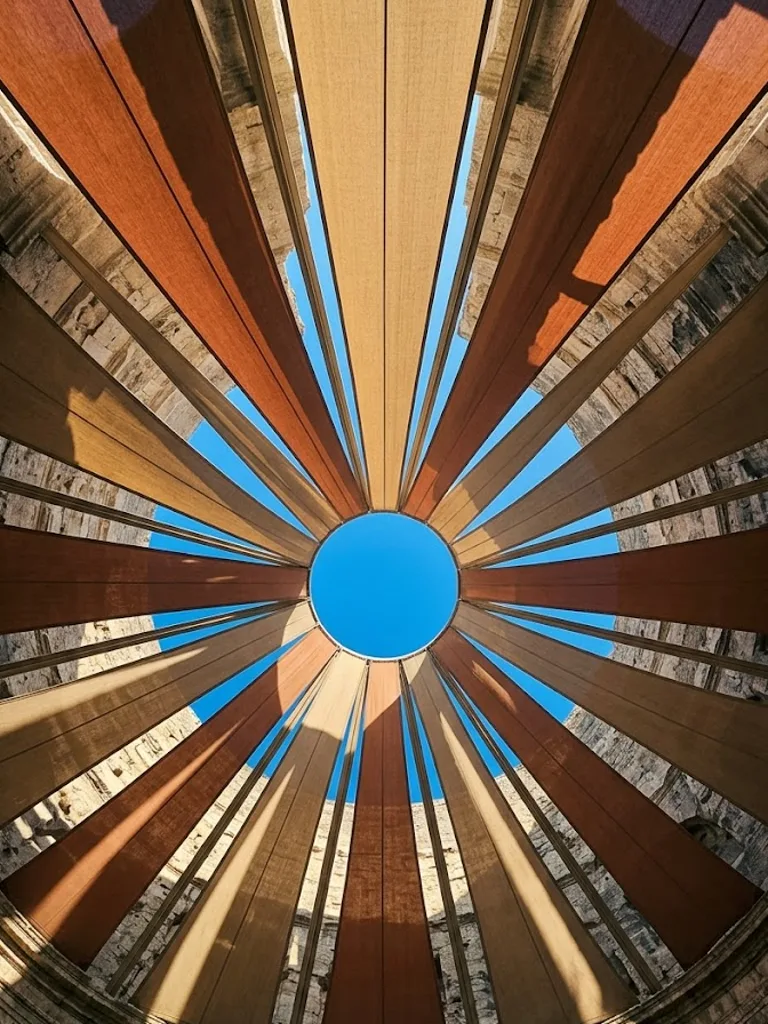
The world's most famous amphitheatre had a very unheroic problem: the sun. The stands were stone, the shows lasted for hours, and a Roman summer shows no mercy. The solution was the velarium: an enormous awning of linen and canvas that covered much of the seating and left the centre open, like an eye.
Deploying it was a naval manoeuvre. More than two hundred wooden masts rose around the upper cornice; between them ran a web of ropes and pulleys from which the panels hung. The only people in Rome capable of handling rigging on that scale were the sailors of the imperial fleet at Misenum, so a detachment was stationed in the city to hoist and furl sails — on dry land, over an ocean of spectators.
Even today, if you visit the Colosseum, you can spot along the top ring the corbels and sockets where those masts once sat: the skeleton of a roof that appeared and disappeared at the sky's whim.