 Margen
Did you know? · From the Margen catalogue
San Diego bought rain for $10,000. It poured for 24 days
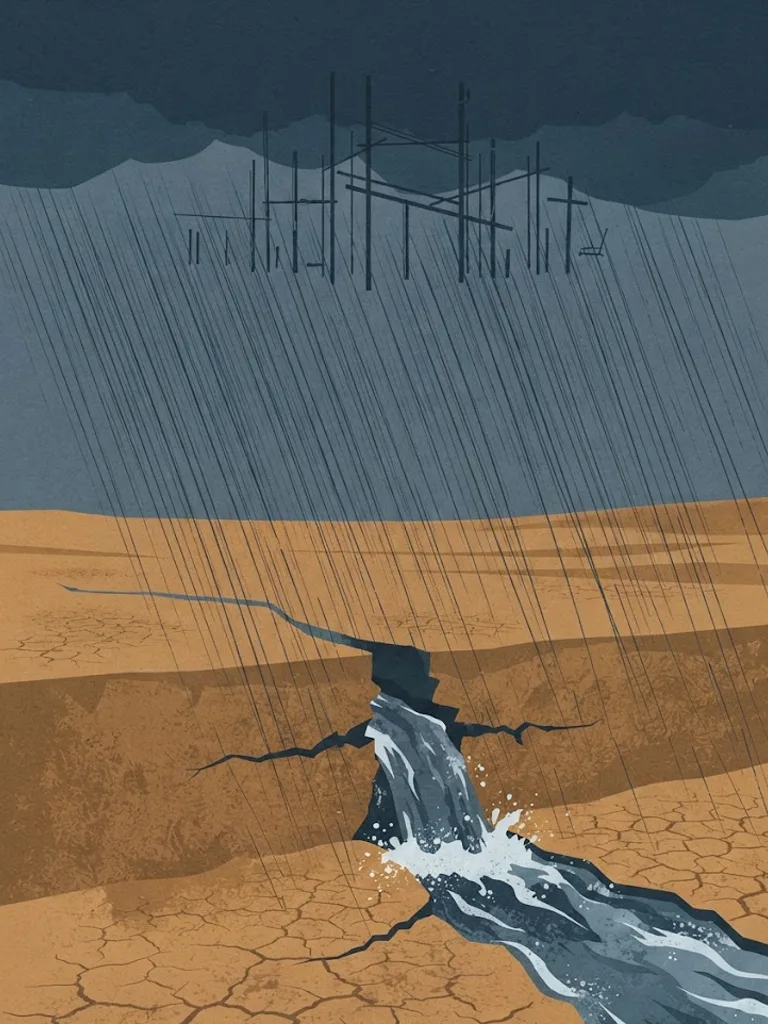
Charles Mallory Hatfield sold sewing machines in Southern California, where he grew up, before he went into the rain business. In December 1915 he offered the San Diego city council a deal: he would fill Morena Reservoir for $10,000, and charge only if he pulled it off. It rained for twenty-four days straight. What happened to that $10,000 took twenty-two years to settle in court.
Morena lies almost a hundred kilometres east of the city. Hatfield called himself a moisture accelerator, a rainmaker for hire, and claimed to know a secret blend of twenty-three chemicals that pulled water out of the sky.
His first proposal came in tiers: free up to forty inches of water, a little over a metre, and a thousand dollars for every inch, two and a half centimetres, between forty and fifty. The council preferred a round number and voted a flat $10,000, payable once the reservoir was full. No formal contract was ever signed: Hatfield went ahead on a verbal understanding, and that would decide the rest of the story.
He put up his wooden towers beside Morena, just north of the town of Campo, set trays of his formula on top and started work on 1 January 1916.
Rain began on the fifth. By the tenth it was falling hard. Then two storms arrived one after the other and the region strung together twenty-four wet days. Morena reached the promised level, but the water kept pouring off the mountains, swelling rivers, cutting roads and stranding villages. Nothing in Hatfield's recipe proved that he had caused the weather: forecasters had already described conditions favourable to major storms across Southern California.
On 27 January the Lower Otay dam gave way. A wall of water up to twelve metres high ran down the valley towards the sea and flattened houses, railway lines and crops. A few kilometres to the south, that same evening, the Tijuana River took out Little Landers, a farming colony in San Ysidro that got word too late for everyone to escape. The San Diego History Center counts twenty dead that day; the county coroner gave a figure of about fifty for the whole episode.
Hatfield went back to the council to collect his $10,000. San Diego offered to pay on one condition: he would also have to take on the damage claims, which already came to three and a half million dollars. He refused, dropped his own demand to $4,000 and ended up suing the city.
To get paid he had to prove the rain was his; proving it made him liable for the flood. The case dragged on for two decades. In 1938 a court ruled that the rain had been an act of God: that spared him the damages and, by the very same argument, left him without his $10,000.
Hatfield went on selling rain by contract in other counties for years and died in 1958 without ever collecting a dollar from San Diego.