 Margen
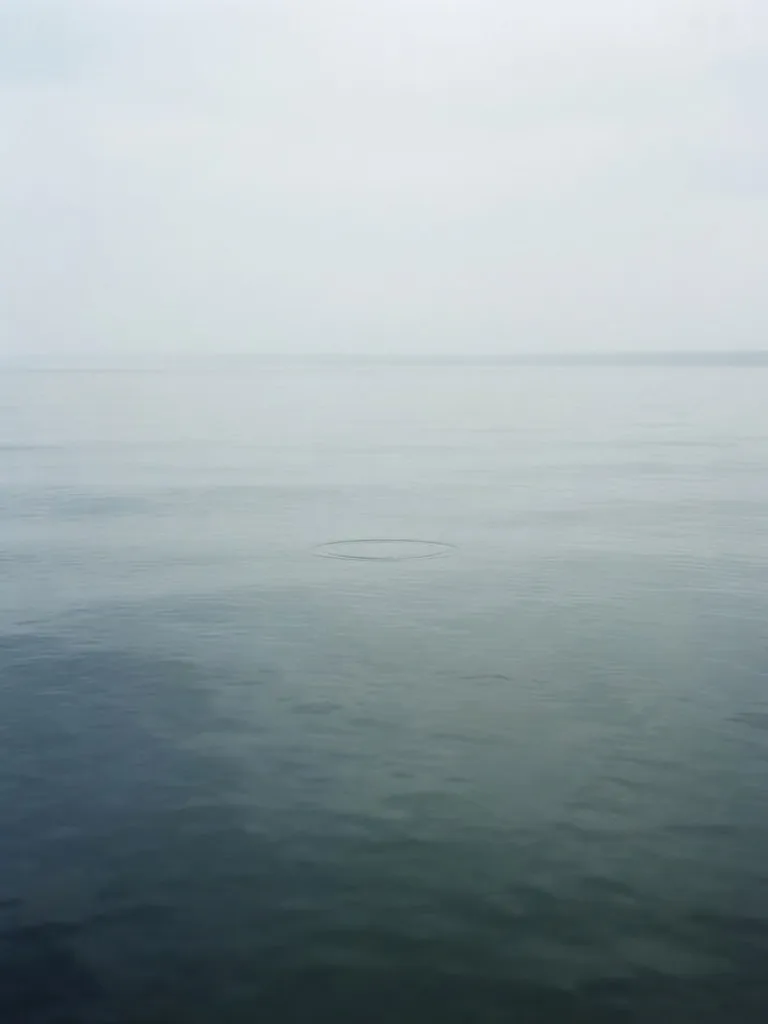
At Orchard Beach, in the northern Bronx, the lifeguard Frank Pia took to filming the rescues made there on sixteen-millimetre film. He then went through those reels frame by frame, looking for exactly what a person does in the seconds before somebody pulls them out of the water. Not one of them showed a drowning person who shouted, or who lifted their arms out of the water to ask for help.
What the footage shows is something else, and it is so unremarkable that it passes for play. The head is very low, with the mouth right at water level. The face lifts for an instant and goes back down. The arms do not wave upwards: they open out to the sides and press the water down, again and again, as a lever to get the nose clear. The legs do not kick, and the body stays vertical, planted in the water. There is no splashing. Nobody calls anybody by name. Pia edited that material into the training film On Drowning in 1970 and published the description in 1974, under the name still used today: the instinctive drowning response.
The shout and the raised arms come from the cinema, which needs the viewer to see from their seat that somebody is drowning. The lifesaving manuals written before those years copied the same picture, because nobody had filmed it on a real beach.
That there is no voice has a mechanical explanation. Speech is a secondary function of the breathing apparatus: first you breathe and then, if there is air to spare, you speak. A drowning person has their mouth below the surface almost all of the time and, in the instants when it clears, has to breathe out and breathe in again. That gap lasts a fraction of a second. There is no spare air for shouting.
Stretching an arm above the head and moving it requires something to push against, and there is nothing there: water only gives back thrust if you press it downwards. That is why they press downwards: it is the only thing that lifts their face.
And it does not last. By Pia's description an adult holds on like that for between twenty and sixty seconds before going under; a small child, less, and for that minute the scene looks calm.
Head low and mouth at water level. Head tilted back with the mouth open. Eyes glassy or shut. Hair across the face without the person pushing it away. Body vertical and still, no kick. An attempt to swim that gets nowhere. Very fast, short breathing, in gulps. Hands pressing the water down instead of up. Those eight signs are the ones lifeguards use every day and they take two minutes to learn.
The practical test is a question: are you all right? A bather who can answer can breathe. If they do not answer within three seconds there is nothing left to assess and you act. And you act from outside, because rescuers who go into the water empty-handed drown too: you throw them something that floats — a cool box, a sealed drum, a ball — or you reach out with something long they can grab while you keep your feet on the bottom, an oar, a twisted towel, the handle of a parasol. Reach or throw, do not go in.
There is another situation that does look like the one in the films, and that is why it is recognised without effort: distress in the water. Somebody tired, with cramp, or with the float too far away is still afloat, so they can shout, they can wave an arm and they can grab a rope if one is thrown. That is the case that turns up in films and in series.
In Spain more than three hundred and fifty people a year drown on beaches, in rivers, reservoirs and swimming pools, and in the worst years the figure has passed four hundred and fifty, according to the annual count by the Royal Spanish Lifesaving Federation, and some of those deaths happen with people right there. Most occur in unsupervised places, which is exactly where the only possible lifeguard is whoever is next to you. And with children it is worse, because a small child goes under in less time and without making a sound.
Next time there are children in the water, do not listen: count heads every thirty seconds and look for the one whose mouth is at water level and who is not moving forward.