 Margen
Did you know? · From the Margen catalogue
An island rose out of the sea in 1831 and lasted five months
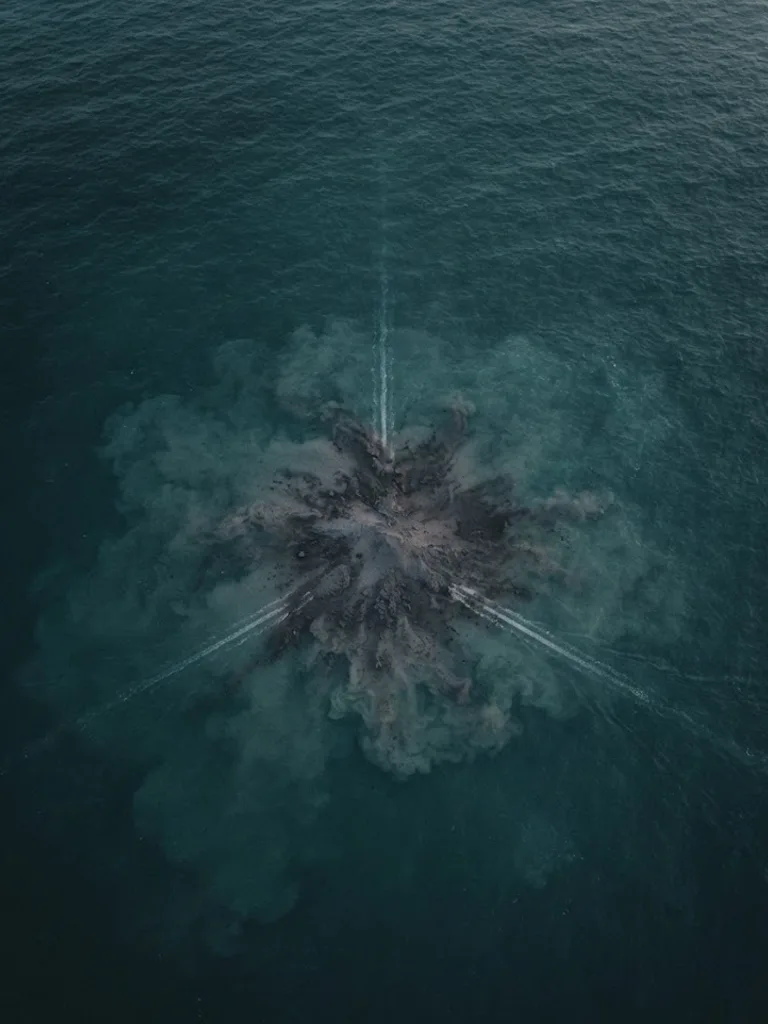
On 10 July 1831, about forty-five kilometres south-west of Sciacca, on the southern coast of Sicily, ships working that route began reporting a column of water and steam rising out of open sea. The chart gave a hundred fathoms there: some one hundred and eighty metres. Nine days later there was an island on the spot, and by December it was gone. In under three months it had been christened three times in three languages.
What was coming up was one of the cones of the submerged volcanic field now called the Campi Flegrei del Mar di Sicilia, in the channel that separates Sicily from Tunisia. The eruption started in late June, broke the surface around 19 July and stopped on 12 August. At its largest the cone stood about sixty-three metres high and measured a little under five kilometres around. It was made of ash, of lapilli — the pea-sized grains of volcanic rock — and of blocks of scoria: loose material, without a single lava flow to armour it from outside. Anyone who landed sank in to the ankle.
Those who got there in time planted flags. On 2 August Humphrey Fleming Senhouse, an officer of the Royal Navy, went ashore, drove in the Union Jack and named it Graham Island, after Sir James Graham, First Lord of the Admiralty. Ferdinand II of Bourbon, king of the Two Sicilies, who had the new island in sight of his own coast, sent a ship and called it Ferdinandea, after himself. In late September the French geologist Constant Prévost arrived with a painter and a field notebook and named it Île Julia, because it had been born in July.
The quarrel had accounts behind it. An island in the middle of the Sicily Channel, on the Malta route, worked as an anchorage, a lighthouse and a customs post, and whoever held it collected. Lawyers in Naples and in London set about drafting briefs on who had arrived first.
While they drafted, the autumn storms were cutting the cone off at the base. By late October the waves were breaking over the summit; in November the island was a bank of black sand at water level; in December 1831 nothing was left above the surface. The ships that went looking for it in January 1832 passed over it without seeing it.
What was left was a legal problem that is still taught — what happens when new territory appears on the high seas and several states claim it at once — and three place names for the same shoal, which sailors settle the Sicilian way: Ferdinandea.
The volcano is still there, sunk. The summit today lies about six metres below the surface. A trawler passes over it none the wiser. Six metres is all it is short of being an island again. In the year 2000, when seismic activity was recorded on the shoal again, a team of Sicilian divers went down to that summit and bolted on a marble plaque carrying a sentence written for an island that does not exist: «This piece of land, once Ferdinandea, belonged and will always belong to the Sicilian people». When they went back down for it, they found it smashed to pieces.