 Margen
Did you know? · From the Margen catalogue
In Valencia a court tries cases out loud, and no one gets paid
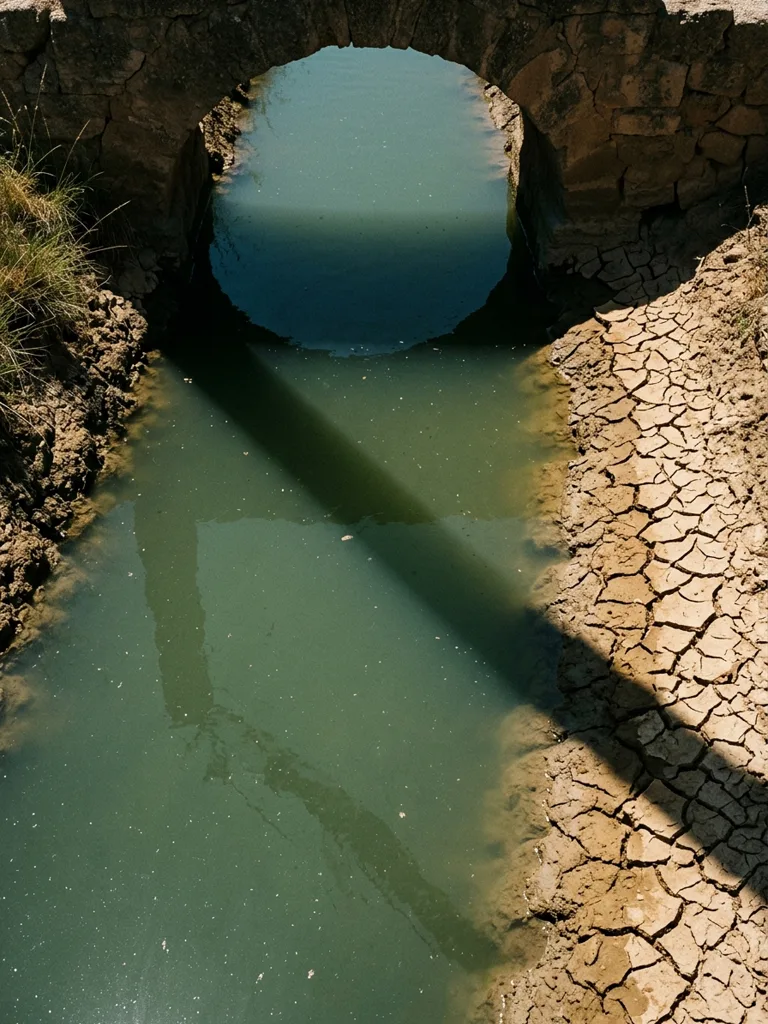
The warden of the Favara canal says out loud what he saw: what time, in which arm —the small channel that runs into the fields—, how much water. The accused answers standing. There is no lawyer and no solicitor, because neither is admitted in this court, and there is not a single written document: the accusation is spoken, the questioning is spoken and so is the sentence. The president delivers it there and then, in Valencian, without getting up from his chair.
The eight síndicos who have just judged him are not paid for doing it. No salary and no expenses.
The accused was summoned by the warden of his own canal for that Thursday. He can be summoned up to three times; if he fails to appear the third time, he is tried anyway, present or not.
This is the Water Tribunal of the Plain of Valencia, and it meets on Thursdays at noon at the Apostles' Door of the cathedral, in the open air, in the Plaza de la Virgen. If the Thursday is a public holiday the week is not skipped: the session moves forward to the Wednesday, and the only one that is never held is the one between Christmas and Epiphany. On the ground the corralet is closed off: eight armchairs, one per canal, each with its assigned place. These are the eight mother canals that rise from the river Turia and irrigate the market gardens around the city, five on the right bank and three on the left —one of them Favara's— and the tribunal is made up of their eight síndicos.
A síndico is not a career judge. The ordinances require him to be a farmer, to work his own land himself and to have, in those very words, a known reputation as an honourable man. He is elected by the irrigators of his own community. Judging is not his trade: it is a duty that comes with the office, and that is why he is not paid for it. It is what the procedural lawyer Víctor Fairén Guillén called economy when he studied this procedure: the trial generates no procedural costs at all, and the only thing the accused pays for is the travel of the warden or the bailiff.
And the water does not wait either. A watering stolen on a Tuesday and settled two years later would settle nothing: that crop has already dried out or already been sold. The eight canals share out the river's flow through 138 branches —the mouths through which each one draws its share— and an irrigation rota has to be governed this week, not next. That is why every Thursday deals with the offences committed since the previous Thursday.
Each trial does leave a written trace, and it is a short one: a Register Book recording the complainant, the accused, the canal, the arm, the grounds of the complaint, the sentence and the date. No statement of claim, no written defence, no documentary evidence, no transcript of the hearing: just those seven columns.
Article 19 of Spain's 1985 Organic Law of the Judiciary, the statute that organises the country's courts, expressly recognises it as a customary and traditional tribunal: what is said in that doorway are sentences. UNESCO inscribed it in 2009 on the list of the intangible cultural heritage of humanity, in the same file as the Council of Wise Men of the plain of Murcia, which does the same job with the water of the Segura.
And when the public session rises, the eight síndicos walk to the Casa Vestuario, beside the square, and hold the administrative session, which is not public and in which nobody is judged: that is where next week's water is shared out among the eight canals.