 Margen
Did you know? · From the Margen catalogue
In 1917 Halifax exploded: the biggest blast before Hiroshima
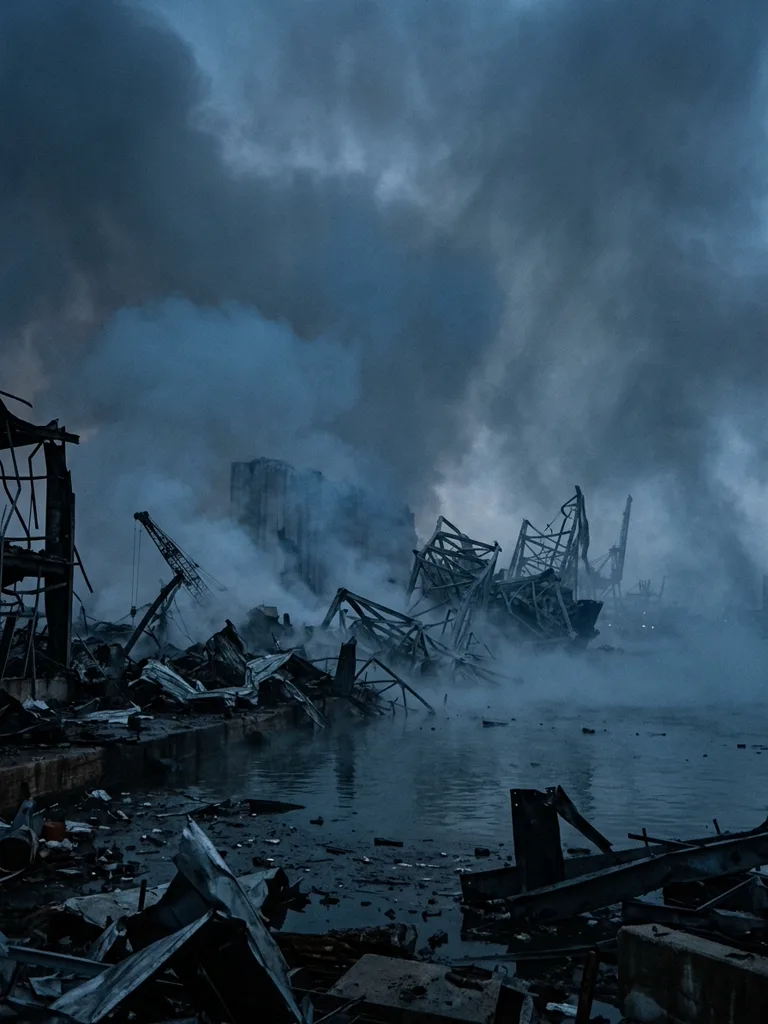
6 December 1917, 9:04 in the morning. The French freighter SS Mont-Blanc rammed the Norwegian SS Imo bow-on in the narrows of Halifax harbour, Nova Scotia. Mont-Blanc was carrying 2,300 tons of picric acid, 250 of TNT, 62 of gun cotton and 246 barrels of benzol lashed to the deck: she was sailing for Bordeaux to feed Allied artillery in the Great War. The collision set the benzol on fire, the crew abandoned ship in the boats, and she drifted burning for twenty minutes until she came to rest at Pier 6 in the Richmond district.
At 9:04:35 she detonated. The blast wave uprooted trees three kilometres away, toppled chimneys at twenty, and was felt three hundred kilometres off, at Cape Breton. It threw up a column of water almost a kilometre high and set off an 18-metre tsunami that swept away the Mi'kmaq village of Turtle Grove and the first three rows of houses in Dartmouth, across the harbour.
The explosion equalled 2.9 kilotons of TNT: the largest human-made blast on record until Alamogordo in July 1945. It killed roughly 1,782 people, injured 9,000, blinded 600 —most of them watching through windows when the glass shattered—, destroyed 1,630 buildings and damaged another 12,000. Boston sent a relief train of doctors and supplies that arrived the next morning; every year since 1971 Nova Scotia sends Boston a Christmas tree in thanks.