 Margen
Did you know? · From the Margen catalogue
The tin can was invented in 1810. The can opener, in 1858
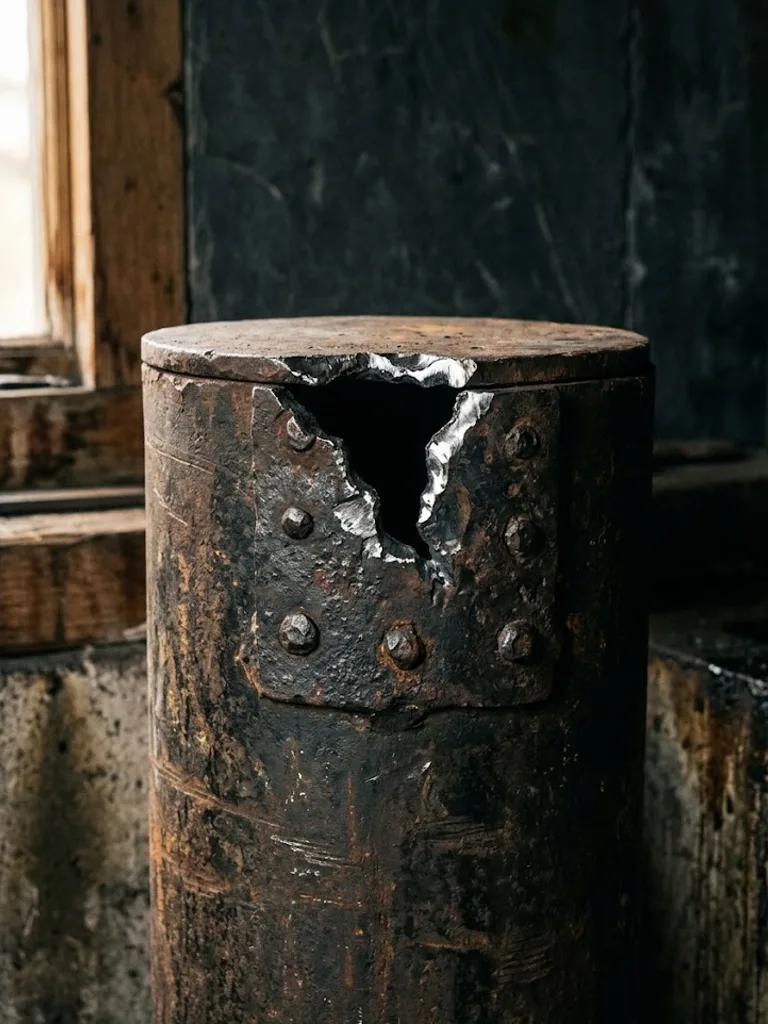
Tamara started her placement at the cannery lab in September, and in her first week she asked me something nobody had asked me in three years: “So before the can opener, how did people open them?” I told her: with an uglier can opener. Not even close: almost 50 years went by between the can and the can opener.
That night I looked it up, because it was bugging me. An Englishman, Peter Durand, patented the tin can in 1810. By 1813 there was already a factory in London filling them for the Royal Navy, which needed food that would last months on a ship. So far, so normal.
The can opener was patented by Ezra Warner of Waterbury, Connecticut, on 5 January 1858. Number 19,063, I’ve got it saved on my phone. In other words, for all that time people bought cans with nothing designed to open them.
Well, there was something. The instructions came on the can itself: cut round the top, near the edge, with a chisel and hammer. A hammer. To eat peas.
And the hammer bit was no joke. Those cans were iron and some were 3/16 of an inch thick, almost 5 millimetres. The ones we open here every morning to test the salt are made of sheet metal under half a millimetre: those were ten times thicker. A knife wouldn’t get you anywhere.
Warner’s invention wasn’t great either. A curved blade on a handle that you stabbed into the lid and dragged round by brute force. The US Army used it in the Civil War, and in lots of shops the clerk opened your can at the counter so you wouldn’t slice a finger off at home. Going out for tuna and having it opened in front of you, like at a deli counter.
The first one with a little wheel that cuts as it turns was patented by William Lyman in 1870, sixty years after the first can, and you had to stab it into the middle of the lid. The one in your kitchen drawer, with the second toothed wheel that grips the rim, is from 1925.
I don’t design packaging here, I just test it. But here, packaging nobody can open wouldn’t even make it off the test bench. Durand sold his patent like that, with no way to open it, and somebody bought it.
I told Tamara the next day. She heard me out, picked up a can of mussels fresh off the line, pulled the ring without looking and offered me one.