 Margen
Did you know? · From the Margen catalogue
The wooden sticks that burned down Parliament
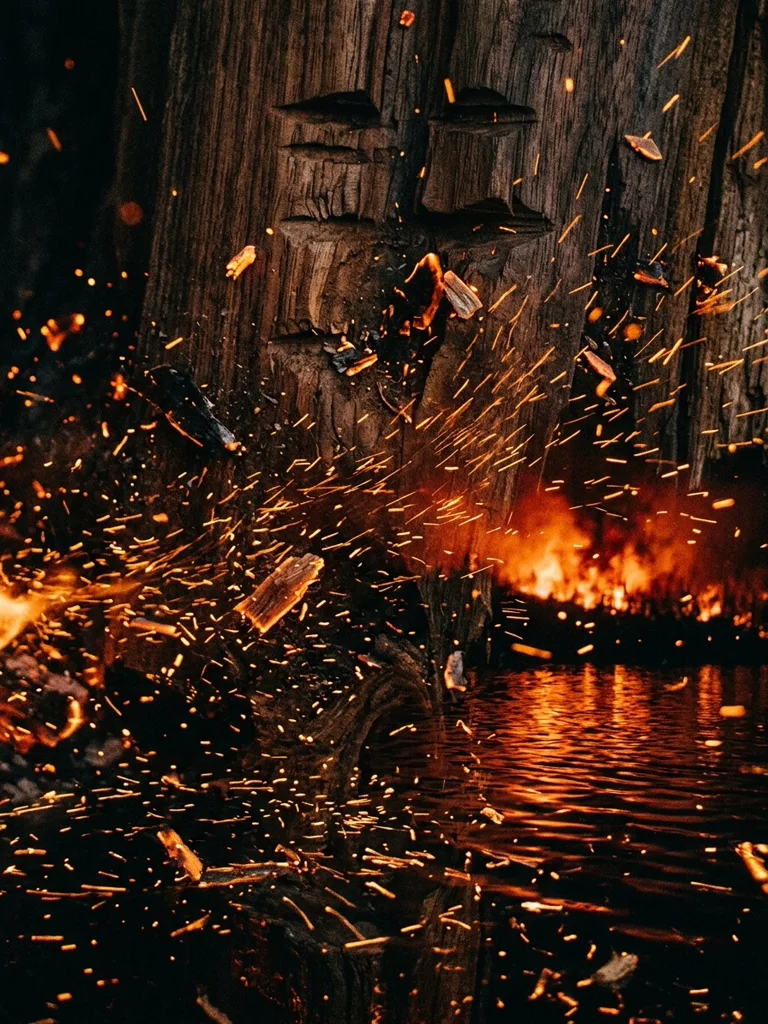
From the 12th century on, the English Exchequer recorded taxes and debts on "tallies": hazel sticks with notches carved to match the amount. The stick was then split lengthwise and each party kept one half. To collect, the halves had to be brought together: if the grain and the notches matched, the debt was genuine. Impossible to forge, and no reading skills required. It worked for six hundred years.
In 1826 the system was finally retired, and in 1834 someone decided that two cartloads of old sticks were taking up too much room. Instead of giving them away as firewood, the order came to burn them in the furnaces beneath the House of Lords. The furnaces were crammed full, the flues overheated and, on the evening of 16 October 1834, the entire Palace of Westminster went up in flames before half of London. Turner was in the crowd, and painted the fire.
The Parliament on every postcard today — the neo-Gothic one, the one with Big Ben — exists because it had to be rebuilt. Six centuries of bookkeeping, reduced to ash by the most bureaucratic possible way of clearing out a cupboard.