 Margen
Serialized book · From the Margen catalogue
Rosalía burns the nine prescriptions in the kitchen
Previously: Rosalía Sagasti, a retired nurse, admitted that she was the one signing the prescriptions, using the pad from the dispensary. Nine blank sheets are left.
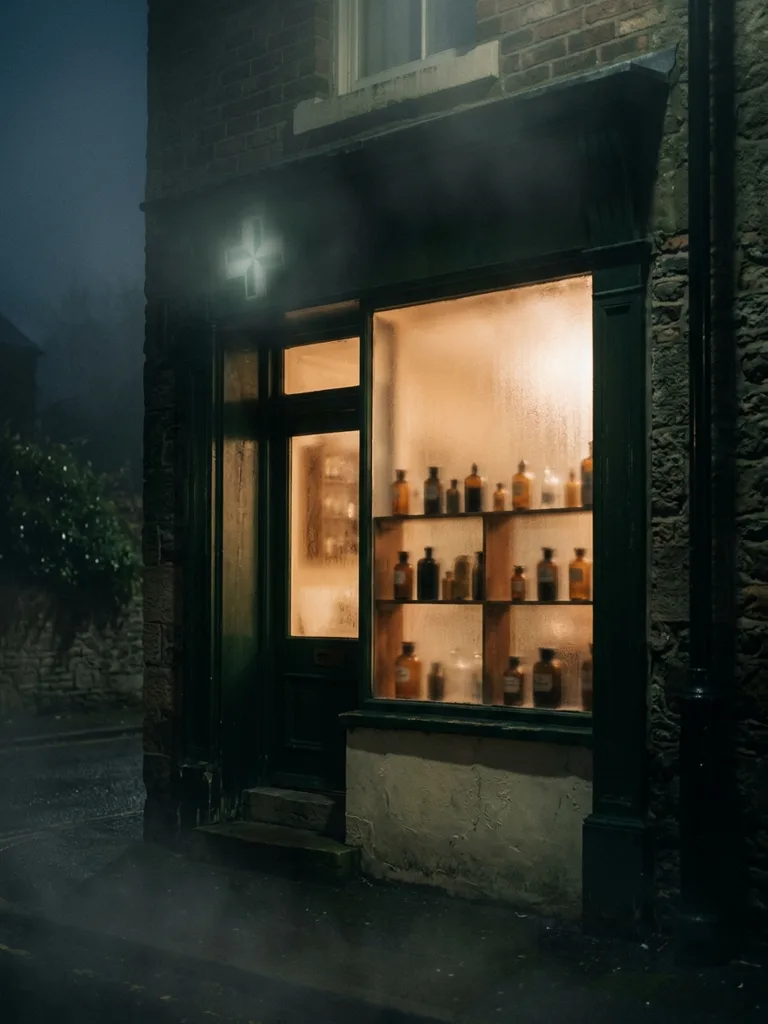
On Sunday the 24th, with two days to go before the inspection, Águeda Mendioroz, the licensed pharmacist of the only chemist's in Valdecierzo, knocked at a quarter to seven on the door of the house next to the doctor's. She was carrying the green prescription pad inside a paper bag from the pharmacy, folded over twice at the top.
She had spent Friday afternoon and the whole of Saturday doing one thing only: pulling the thirty-one dispensations out of her computer, laying them out on a single sheet by date and by patient, and looking at them. Thirty-one times she had taken a prescription bearing Braulio Sagasti's signature, run it through the scanner and handed the box across the counter. Eleven names. Not one complaint. Not one expired. All of them billed to the health service.
Rosalía opened the door with her apron on. Behind her the kitchen was warm: a wood-burning range, the kind that in Valdecierzo gets lit as soon as the cold bites and isn't allowed to go out until May, with its black plate and the iron rings you lift with a hook.
"Come in, you'll catch cold," she said. "There's coffee."
"I haven't come for breakfast."
"I know. Come in anyway."
Águeda set the bag down on the oilcloth, on the very spot where on Friday Rosalía had counted the nine blank sheets. She did not sit down.
"I've had this in the pharmacy safe for three days," she said. "Three days. If on the twenty-sixth Petra Aldunate opens that safe and finds an official pad from the surgery inside it, I'm not a pharmacist who was deceived: I'm the one who was keeping it. And I dispensed all thirty-one prescriptions myself, with my registration number on every one."
Rosalía filled two cups without asking. She put one in front of Águeda and kept the other in her hand, standing.
"That's why I told you on Friday and not on the twenty-fifth," she answered. "So you'd have time to decide what to do about me."
"I'm not going to decide anything about you. I'm going to hand it all in. The lot. The pad, the stamp, the thirty-one copies, the list of the eleven and whatever else is needed. If I hand in the whole bundle, the worst they can open is a disciplinary file. If I hand in half and the rest turns up later, they can shut my door. And the door they shut is the only chemist's for twenty-two kilometres."
"Not the whole pad."
"Rosalía."
"The covers, yes. The covers carry both serial numbers, and the serial numbers are in the record the clerk signed on the twelfth of April, so nothing is missing there and nobody can say anything is missing." She set her cup down on the hot plate, where the coffee went on steaming. "What does not leave this kitchen is the nine sheets."
Águeda opened the bag and took out the pad. She laid it flat, health-service letterhead facing up, and opened it at the rubber band.
"That's destroying evidence."
"That's destroying nine blank prescriptions," said Rosalía. "Think for a moment about what you've got there, Águeda, and not about what they're going to ask you on Tuesday. Every one of those sheets has my brother's registration number printed on it. Every one will take a signature I can do with my eyes shut, because I spent thirty-one years watching him write it. I've said I did them. It's said, and I'm not going to unsay it. What's left there on the oilcloth isn't proof of what I did: it's permission to do it nine more times."
"I'm not going to let you do it."
"You won't always be behind that counter. And I'm seventy-one."
There were two short knocks at the door, and in came Simón Goñi, the baker, without waiting, the basket hooked over his forearm and his face red from the oven. He left a loaf on top of the chest and took a plastic box with seven compartments out of the basket.
"Balbina's pill organiser, she wasn't in on Thursday," he said. "I'll take it up to her now, I'm doing an extra run today."
"Leave it there, Simón."
Simón looked at the pad lying open on the oilcloth and asked nothing. He's one of the ones who don't ask. He wiped the flour off his hands onto his trousers, said he'd take Amadeo's up on Thursday too, and went out closing the door slowly, with the care of a man who thinks someone inside is asleep.
Águeda waited until she heard the gate.
"Eleven pill organisers," she said. "My counter fills them every week and that man carries them up in a basket. Balbina Ochandiano, eighty-four, digoxin and furosemide. Amadeo Etxarri, eighty-one, three tablets in the morning and two at night. Fermina Larrañaga, seventy-nine, who lives alone up at the top and doesn't remember the names, she remembers the colours. Eleven prescription records that after the twenty-sixth nobody is going to renew, because the area doctor holds surgery twenty-two kilometres away two mornings a week and has never laid eyes on Balbina."
"That's where I wanted to get to," said Rosalía.
She crouched down in front of the dresser, felt about behind the tablecloths and took out a notebook with grey oilcloth covers, squared paper, the corners rounded from years of going in and out of a handbag. She put it on the table, next to the pad, and left it there without opening it.
"I started this notebook in January of ninety-one, with the doctor before him, the one with the spiky handwriting, after I came within an inch of injecting a man with something that was not his. Braulio arrived two years later, and the only thing he said to me was not to leave a single page undated. In here is everyone's blood pressure, the doses, the allergies, who can't swallow big tablets, who lives alone, who can't read the box and who has a daughter in Pamplona you can ring on a Sunday. Thirty-five years. It's handwritten and it's ugly, but there isn't a day missing."
Águeda still didn't touch it.
"And you show this to Petra Aldunate on Tuesday."
"You show her this," said Rosalía, "because you're the one who's going to have to go on dispensing when they've taken everything off me down to my shadow." She finally sat down. "Now open it at the back."
Águeda opened it at the back. On the last written page, dated the eleventh of April, there was a list of eleven names, one under another, and beside each one a date: the last time a doctor had seen that regimen. Ten of the dates were from 2024, the winter before Braulio died. One was from 2019.
And beside three of the eleven names, in the margin, in the same small handwriting, there was one more line.
"Read them," said Rosalía.
"'Ochandiano, Balbina. Digoxin: moved from night to morning since 6 February, and sleeping pill withdrawn. Fall at home before dawn, pulse 48. R. S.'"
"Go on."
"'Etxarri, Amadeo. Furosemide: alternate days since 20 March, his ankles were swelling in the heat. R. S.' And 'Larrañaga, Fermina. Iron withdrawn since 2 March, it was closing up her stomach. R. S.'" Águeda looked up. "Those three boxes are the ones I fill. Compartment by compartment, every week, since February. And not once did I ask myself why Balbina's sleeping pill had disappeared. On Friday you told me you hadn't changed anything."
"I told you I didn't prescribe anything new. And I didn't prescribe anything new." Rosalía had her hands open on the oilcloth. "But Balbina's pulse went down to forty-eight and she fell before dawn, so I moved her digoxin to the morning and took away her sleeping pill, and I wrote it in there the same day, with the date and my initials, so that anyone could come along, read it and tell me I'd got it wrong. Three times in two years. All three are written down. There is no fourth, and you won't find a fourth."
"That's worse, Rosalía."
"That's exactly the same thing you already knew, except now it's in your hands." She stood up. "And now for the other business."
She picked up the pad, took a pair of sewing scissors out of the cutlery drawer and cut along the perforation, sheet by sheet, resting the blade against the edge of the table to keep the line straight. All nine came away clean. She counted them again on the oilcloth, out loud, and Águeda did not interrupt her.
"Nine."
She lifted the iron ring with the hook. Inside, the wood was down to live embers, no flame. She fed the sheets in one at a time, waiting for each to catch properly before adding the next, and the stamped paper burned with a blue edge that neither of them had ever seen paper burn with before. At the seventh, Águeda came round the table and looked down into the fire, her hands behind her back.
"Number eight," said Rosalía.
"Number eight."
"Number nine."
She put the ring back and wiped the plate with the cloth. On the oilcloth there remained the green covers of the pad, with both serial numbers printed on them, and the surgery's rubber stamp, which she did not touch.
"You take the covers and the stamp on Tuesday," she said. "And this as well."
"And about the nine, I say they were burned in your kitchen and that you burned them," said Águeda. "In those words. I am not going to say they are missing."
"In those words."
She opened the grey notebook at the first page and turned it round to face Águeda. Taped inside the front cover, where on Friday there had been nothing, was a half sheet written that same morning, in handwriting larger than usual so that it would read clearly: the date, the twenty-fourth, the thirty-one prescriptions by serial number, and underneath, on a single line, "I signed them. Rosalía Sagasti Aldaz, nurse".
"So that on Tuesday they don't have to take your word for it," she said. "Let them read it."
Águeda closed the notebook, put it into the pharmacy's paper bag along with the covers and the stamp, folded the top over twice and tucked the bag under her arm.