 Margen
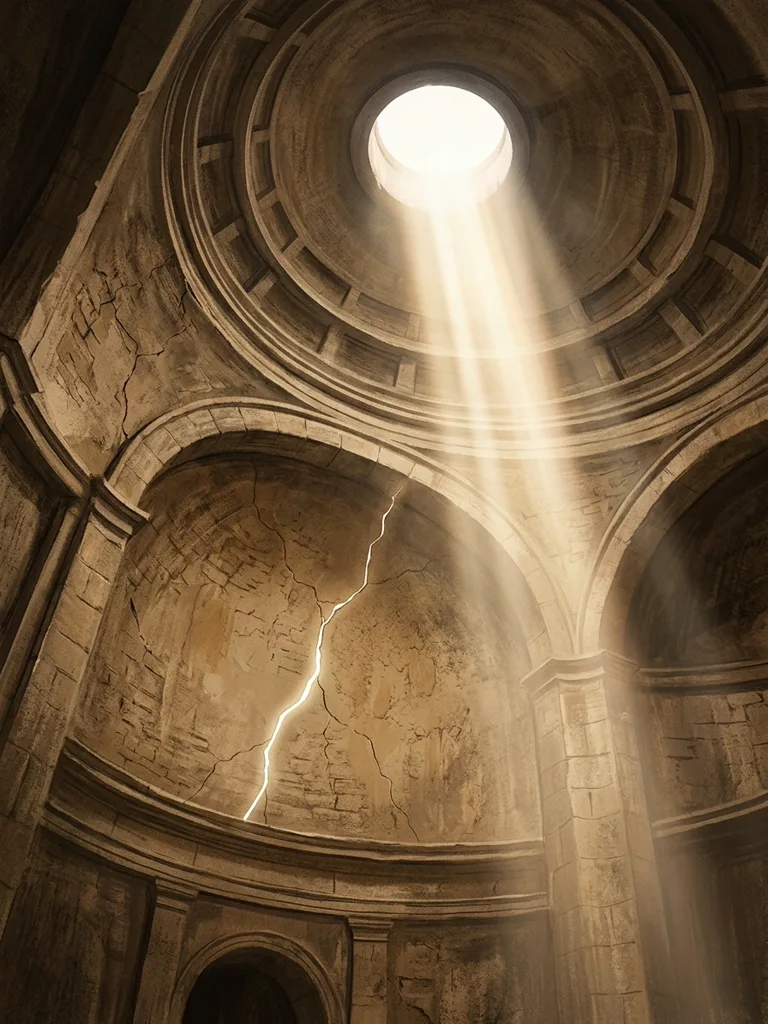
The dome of the Pantheon in Rome was finished almost nineteen centuries ago and remains the largest unreinforced concrete dome in the world. Our modern concrete, with all its steel inside, tends to start cracking within a few decades. Theirs, through earthquakes, rain and tourists, still stands.
For a long time the credit went to the volcanic ash the Romans mixed into their formula. But in 2023, a team at MIT found another piece of the trick: small white lumps of lime, present throughout Roman concrete, which experts had dismissed as sloppy mixing. They are exactly the opposite: a built-in first-aid kit.
The Romans mixed with quicklime, at high temperature, and that left those granules scattered through the material. When a crack opens and rainwater seeps in, the granules react, dissolve and recrystallise as calcium carbonate: the crack seals itself within weeks.
On the harbour piers, the sea finished the job: salt water made new minerals grow inside the walls, welding them tighter. Every storm left them a little stronger.
Nineteen centuries later, laboratories are trying to copy the defect.