 Margen
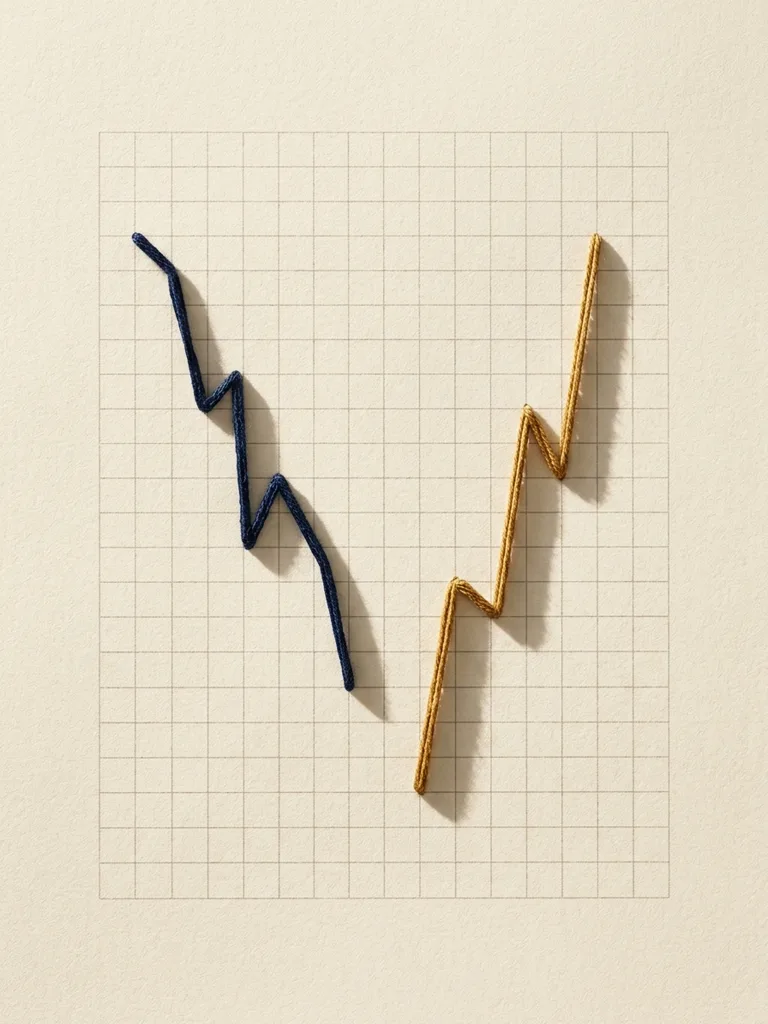
If a fund drops 50 %, it does not come back with a 50 % rise. It needs 100 %.
The arithmetic in your head: 0.5 × 2 = 1. To undo a 50 % drop you must double what you have left. From −30 %: rise 43 % (1 ÷ 0.7 = 1.43). From −20 %: rise 25 %. From −10 %: rise 11 %. Each point that falls is compared against a smaller number when it climbs; that is why the asymmetry grows fast.
Three rules for your pocket:
1. Before you invest, look at the worst drop you can truly stand. If you cannot bear waiting for +100 %, you cannot bear −50 %: your real loss ceiling sits above −50 %.
2. Think in years, not months. The MSCI World fell −34 % in 2020 and took five months to recover. In 2008 it fell −42 % and took five years. That +72 % was paid in time, not in skill.
3. On every drop, multiply the capital you have left by the rise you would need and write it in the same spreadsheet where you keep your monthly contribution: it inoculates you against «it will bounce back soon» and forces the call on whether to keep buying.
And a hard one: two consecutive drops of 50 % leave one hundred euros at twenty-five. To reach one hundred again you need +300 %.