 Margen
Did you know? · From the Margen catalogue
In 1958 a wave climbed 524 metres up an Alaskan slope
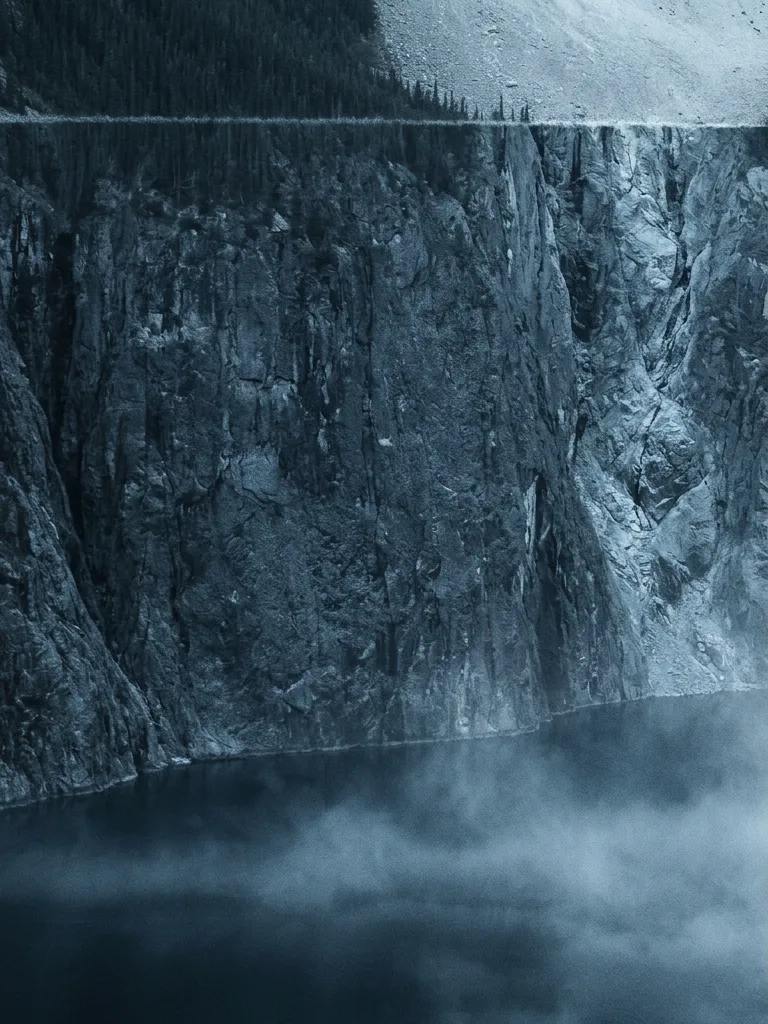
In Lituya Bay, a narrow fjord in south-east Alaska, a magnitude 7.8 earthquake dropped some thirty million cubic metres of rock from a nine-hundred-metre slope on the night of 9 July 1958. It fell all at once onto water penned in between walls, and the water had nowhere to go but up: it climbed the mountain opposite and stripped the forest bare to a height of 524 metres.
The place helped. Lituya is eleven kilometres long and its head closes in like a funnel, so the shove did not spread out to open sea: it hit the wall in front of it.
No instrument produced that figure. It was measured on foot by Don Miller, a geologist with the United States Geological Survey, who walked the exact line where the snapped trunks ended and the standing trees began.
Three fishing boats were anchored inside the bay that night. Howard Ulrich, a skipper, and his seven-year-old son saw the wall of water coming, rose with it and came down the far side still afloat. Bill and Vivian Swanson were carried over the sand bar at the mouth of the bay, over the treetops, and their boat sank on the other side; they were picked up alive. Orville and Mickey Wagner, on the third boat, never came back.
Sixty-eight years on, those 524 metres are still the greatest height a wave has ever reached on dry land.