 Margen
Did you know? · From the Margen catalogue
The lake that swallowed 11 barges in three hours
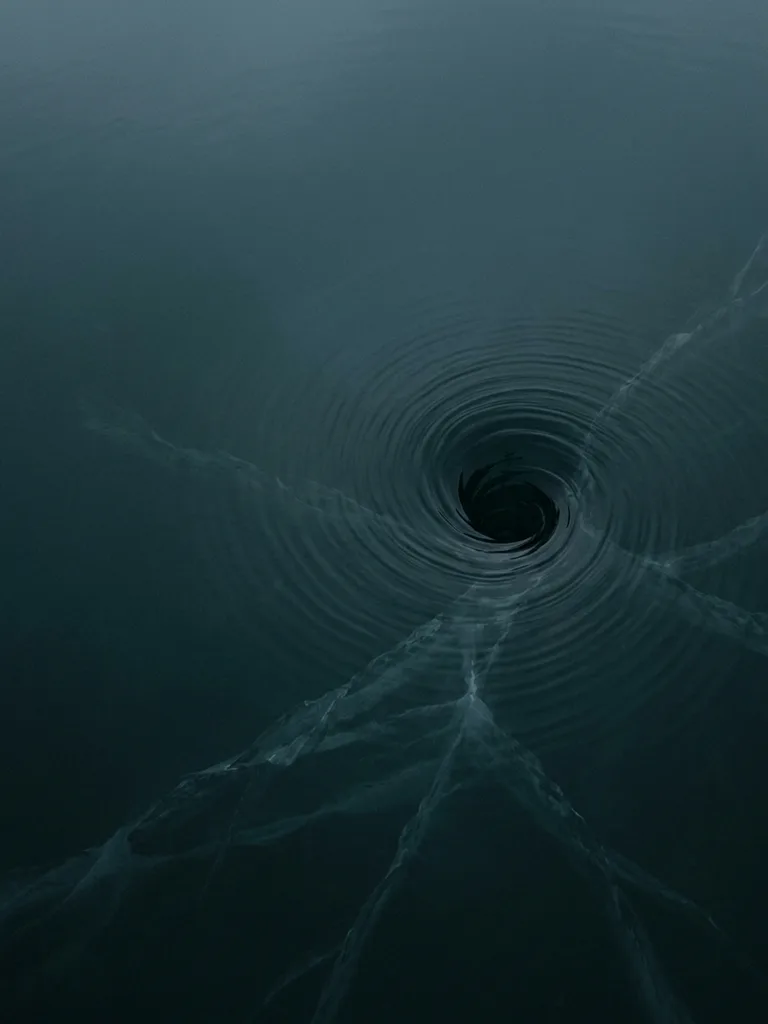
At six in the morning on 20 November 1980, the drilling rig Texaco had set up on Lake Peigneur, in southern Louisiana, was looking for oil with a 36-centimetre bit. The lake was a sheet of fresh water three metres deep. Three hundred metres below it, the Diamond Crystal Salt Company was digging salt out of galleries the size of a cathedral.
The calculations were wrong and the bit came through the roof of the mine. Through a hole the width of a dinner plate, the entire lake began to pour in. The water dissolved the salt, the hole grew, and a whirlpool opened in the middle of the lake that swallowed both drilling rigs, eleven barges, a tugboat and sixty-five acres of Jefferson Island —about twenty-six hectares— botanical garden and greenhouses included.
The Delcambre Canal, which until that morning had drained the lake towards the sea, turned around and started running backwards. For a few hours Louisiana had the tallest waterfall in its history, fed by the Gulf of Mexico.
Nobody died. The fifty-five miners underground got out through the ventilation shafts following the evacuation drill, and the men on the rig reached the shore before it went under. Two days later, once salt water had filled the cavity and the pressures evened out, nine of the eleven barges bobbed back to the surface like corks.
Lake Peigneur is still there, but it is no longer fresh and it is no longer three metres deep: it is over sixty. Texaco and the drilling contractor paid 32 million dollars to the mining company and 12.8 million to the gardens.