 Margen
Serialized book · From the Margen catalogue
36 hours of water left and 14 plots that irrigate
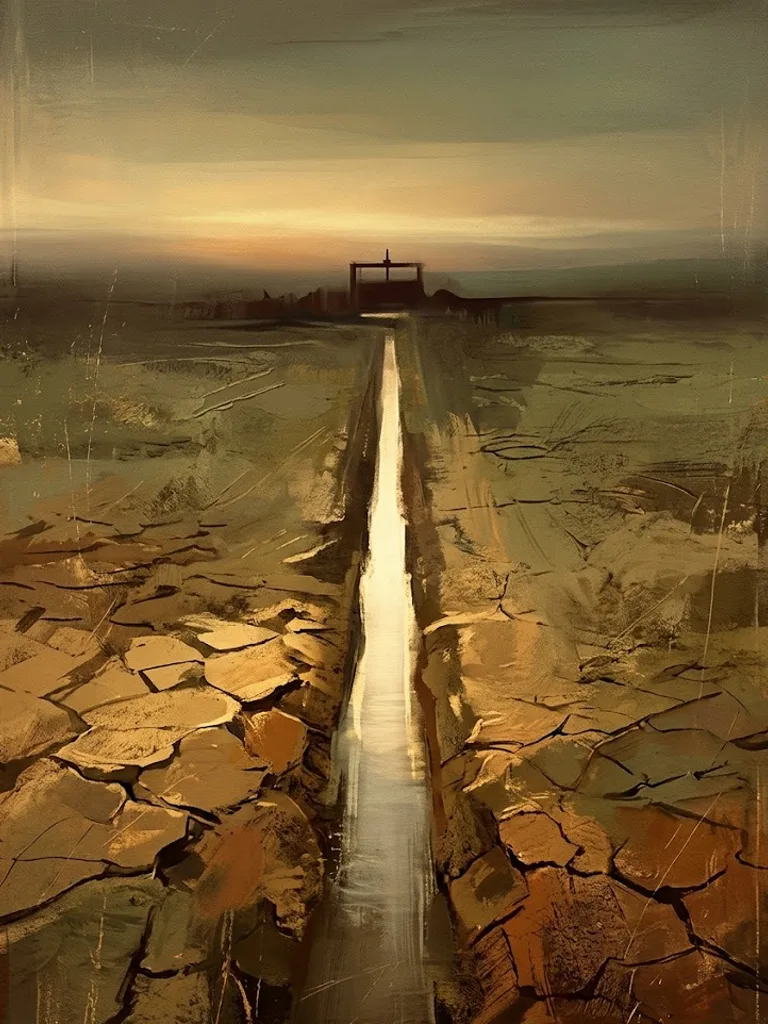
Felisa Arcediano opened the key shed at ten past six in the morning with the river authority's notice in her hand: there were 36 hours of water left in lateral 7 and the canal closed on the 11th. Fourteen plots irrigate off that lateral. She had been the water warden for four months —the job of opening and closing the irrigation turns— and it was the first time the numbers did not come out.
She had added them three times at the kitchen table, with the turn book open and a carpenter's pencil. Plot 1 asked for two hours. Plot 3, Chelo Bardají's, twelve hectares of sunflower, asked for nine. Olimpio Sanz's plot 9 asked for five. Nazario Elorrio's plot 12 asked for six, the same six as every year. Plot 14 asked for nothing, because plot 14 is the Cerrada and nobody has signed for it in twenty-eight years.
Fifty-two hours requested. Thirty-six in the canal.
The key shed smells of iron and wet sacking. Inside there is a wall of numbered keys, one per sluice gate, and the black oilcloth book where her uncle wrote down, for thirty-one years, the opening time, the closing time and the initial of whoever was irrigating. Felisa took the key to number 7 and went out onto the track. At that hour the plateau was the colour of ash and you could hear the water before you saw it.
Donato Rebolledo was waiting for her at kilometre four, leaning on his motorbike. Donato is the canal keeper, the man the river authority pays so that nobody touches what is theirs, and he has spent fifty-eight years looking at this water, thirty of them being paid to look at it.
"You're early for a Tuesday," he said.
"I've come to see the gauge."
The gauge is an iron rule fixed to the canal wall, with the numbers painted in white, that tells you how much water goes past. Donato stepped aside to let her look and said nothing while she wrote the figure in the book. Then he did say something.
"That iron has been bent since the flood."
"Bent by how much?"
"Bent," said Donato. "I don't keep the accounts of your turn."
Felisa wrote that down too, with the date, because her uncle had left her one single instruction before retiring: that in this trade whatever is not written down has not happened, and that the one who shares out water gets judged twice, once in the year of the sharing and once ten years later.
She came back along the lower track, which runs past the boundary of the Cerrada. Plot 14 is two thousand square metres of old orchard with four fig trees and a mulberry, fenced off with wire since the owner left. It was green. It is always green, in August too, and in the village that gets told the same way they tell you the fountain has never run dry: as something that was already here before we were. Felisa walked on past. She had sixteen hours that did not exist and an assembly at nine.
At nine the assembly opened in the irrigators' hall, which is the ground floor of the old dance hall, with twelve plastic chairs and an unlit stove. Nine of the fourteen came. Pura Mazuelas, chairwoman of the community since 2011, seventy-one years old and the quietest voice in the room, sat at the table with the papers and let Felisa do the talking.
Felisa read out the hours requested one by one, out loud, plot by plot, and at the end she read the total. Fifty-two. Then she read what there was in the canal. Thirty-six. Between one figure and the other there was the noise of a chair.
"That's sixteen hours that don't exist," said Olimpio Sanz, tractor driver, the man who irrigates plot 9 and the one who always speaks first.
"Sixteen."
"Well then take them off whoever you have to take them off, but on the 3rd I irrigate, I've had it booked since March."
"On the 3rd you irrigate if it's your turn," said Felisa.
Nazario Elorrio, who has plot 12 and is sixty-three, did not get up from his chair to speak. He spoke from the back, with his hands on his stick.
"I've had my six hours since before you were born."
"I know. They're written down."
"Then there's nothing to share out."
Chelo Bardají asked to speak by raising two fingers. Chelo is the village vet and irrigates plot 3; the sunflower on those twelve hectares is the only money she earns that is not her salary.
"If I don't irrigate before the 8th, I lose the whole thing. I don't lose a harvest: I lose the sowing and what I still owe on the fertiliser."
"I know that too."
"So what are you going to do?"
Felisa left the book open on the table, facing the room, so they could see it from the chairs. On the left-hand page were the hours requested, with each man's name beside them. On the right-hand page, blank, was the allocation.
"The first thing is to know how much water there is," she said. "The gauge at four has been bent since the flood and the 36 hours on the notice are the iron's hours, not the canal's. I'm not signing a single turn until tomorrow midday."
"Are you going to leave us without water over a bent ruler?" said Olimpio.
"I'm going to leave you without water over the water there isn't. The ruler only tells me how much that is."
Pura Mazuelas stood up then, took the book and closed it with both hands, without roughness, the way a missal is closed. She set it down in front of Felisa.
"Tomorrow midday, then," she said. "And listen to one thing, which I'm saying in front of everybody so that I don't forget it either: nobody here is going to blame you for the water that doesn't come. They're going to blame you for the sharing out. So don't come back to me with the iron's accounts."
She put on her coat and, before she reached the door, she turned round.
"So tell me who goes without water."