 Margen
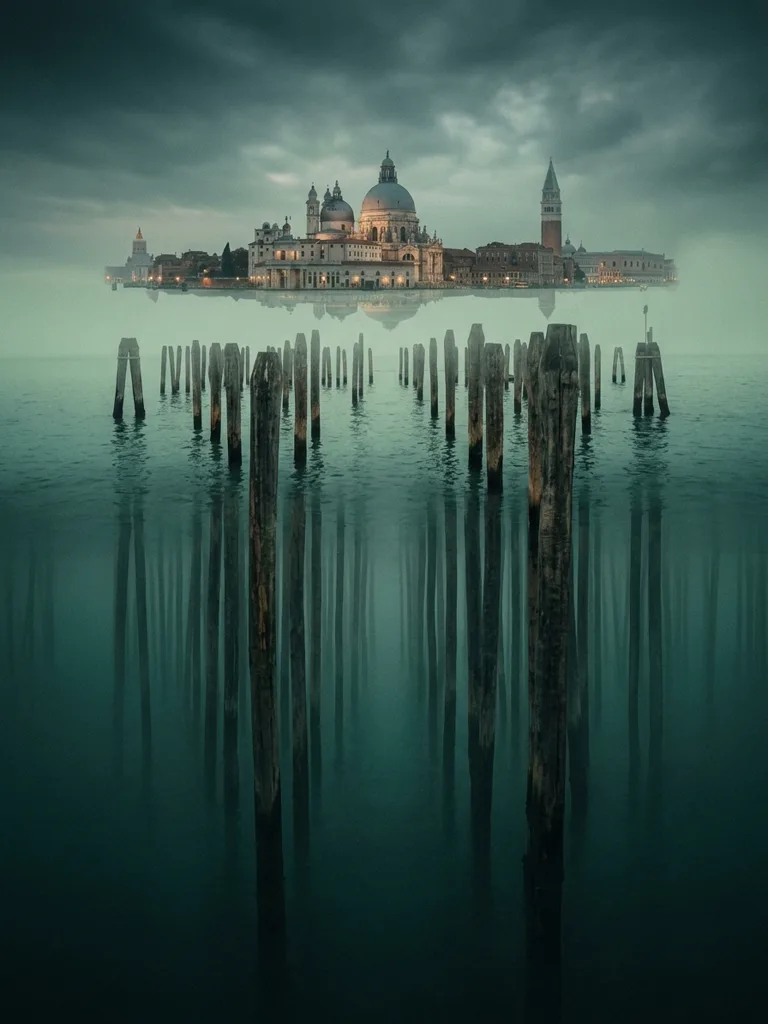
Venice doesn't rest on rock: it rests on wood. When the first Venetians decided to build a city in the middle of a lagoon, they drove millions of alder, oak and larch trunks down through the mud until they reached a layer of compact clay. On top of that upside-down forest they laid wooden platforms, and on top of those, the stone.
The astonishing part is that those trunks are still there, a thousand years later. Wood rots because of fungi and bacteria that need oxygen, and under the lagoon's mud there is barely any. Starved of air, the trunks not only refuse to fall apart: the minerals in the water slowly seep into them, leaving them almost as hard as stone. The water that should destroy them is their preservative.
The numbers are dizzying. Under the basilica of the Salute alone there are more than a million piles. The Rialto bridge rests on some twelve thousand. Every palace you see floating in the postcards is actually standing on tiptoe over a borrowed forest.
The most improbable city in the world is held up by the humblest thing at hand: trees driven in upside down, holding on in the dark for ten centuries.