 Margen
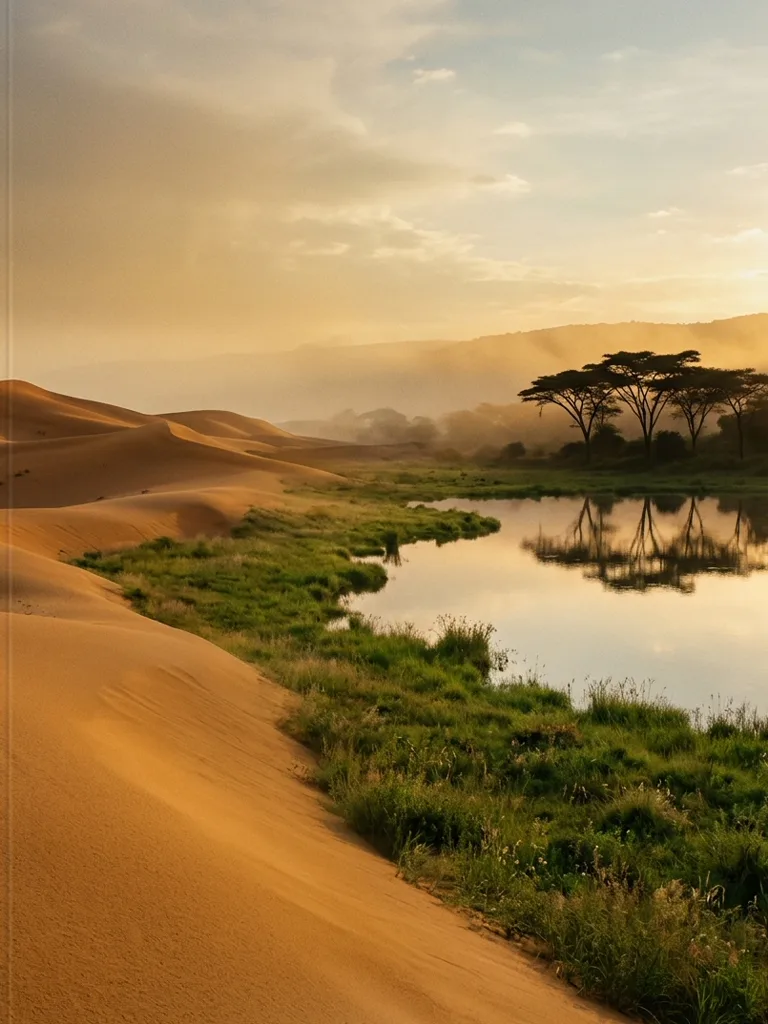
In the heart of the Sahara, on the Gilf Kebir plateau, there is a cave with human figures painted thousands of years ago. They are swimming. Today, in that exact spot, decades can pass without a single drop of rain.
It was no artist's whim. Between 11,000 and 5,000 years ago, a slow wobble in Earth's orbit and tilt pushed the monsoons northwards, and the planet's largest hot desert was a savannah of acacias, rivers and huge lakes. Lake Mega-Chad grew into one of the largest freshwater lakes the planet has ever held; today only a tiny fraction remains. Beneath the sand, people keep finding the bones of hippos, crocodiles and fish — and the fishing hooks of those who lived off them.
When the monsoon withdrew, the green retreated south and its inhabitants migrated. Many ended up beside a river called the Nile, just as Egypt was beginning to take shape along its banks.
And the pendulum hasn't stopped: those same orbital cycles keep turning. In a few thousand years, grass will grow on the Sahara again.