 Margen
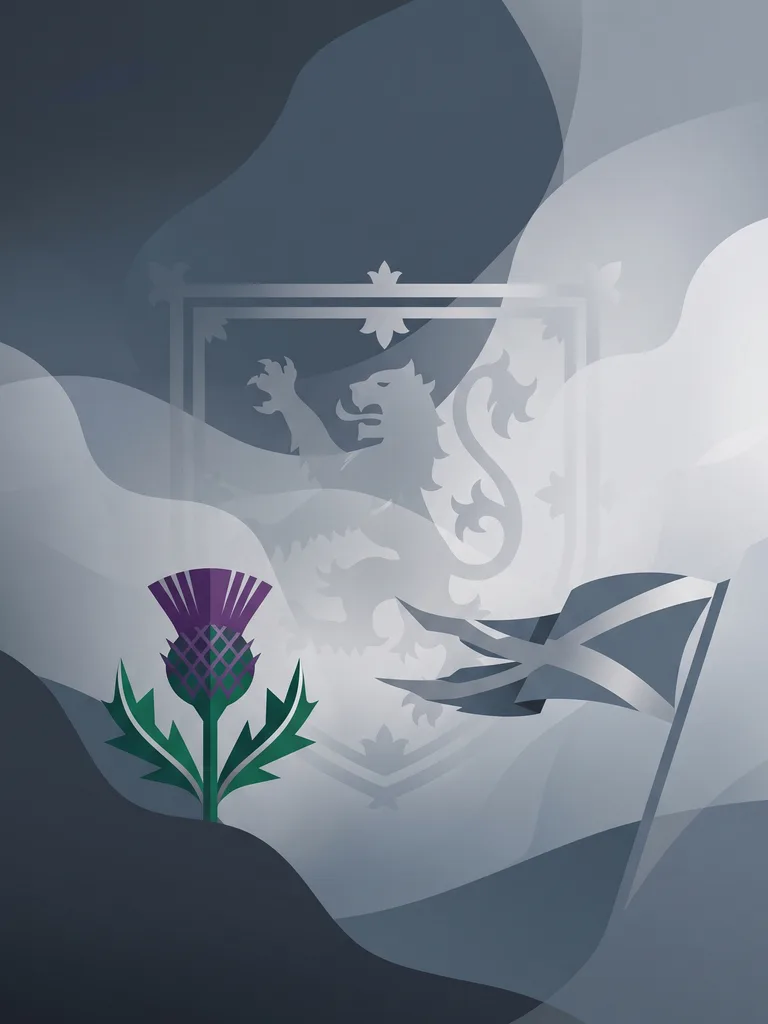
In medieval bestiaries, the unicorn was no gentle fairy-tale creature: it was the fiercest, most untameable animal imaginable, impossible to capture alive. Exactly the image a small, proud kingdom wanted to project to its neighbours. Scottish kings adopted it as their emblem around the fifteenth century, and James III even minted gold coins called, literally, "unicorns".
There is a better detail: on the coat of arms, the unicorn always wears a golden chain around its neck. The heraldic explanation is that such a beast, loose, was simply too dangerous; only a king could keep it restrained.
And a closing twist that seems scripted: according to tradition, the unicorn's natural enemy was the lion — which happens to be the symbol of England. When the crowns were united in 1603, the new British coat of arms sat the two rivals face to face, one on each side, holding up the same shield.
Four centuries later they are still there: the lion and the unicorn, mythological enemies turned office colleagues.