 Margen
Did you know? · From the Margen catalogue
In 1963, 9,862 skaters set off and 127 finished
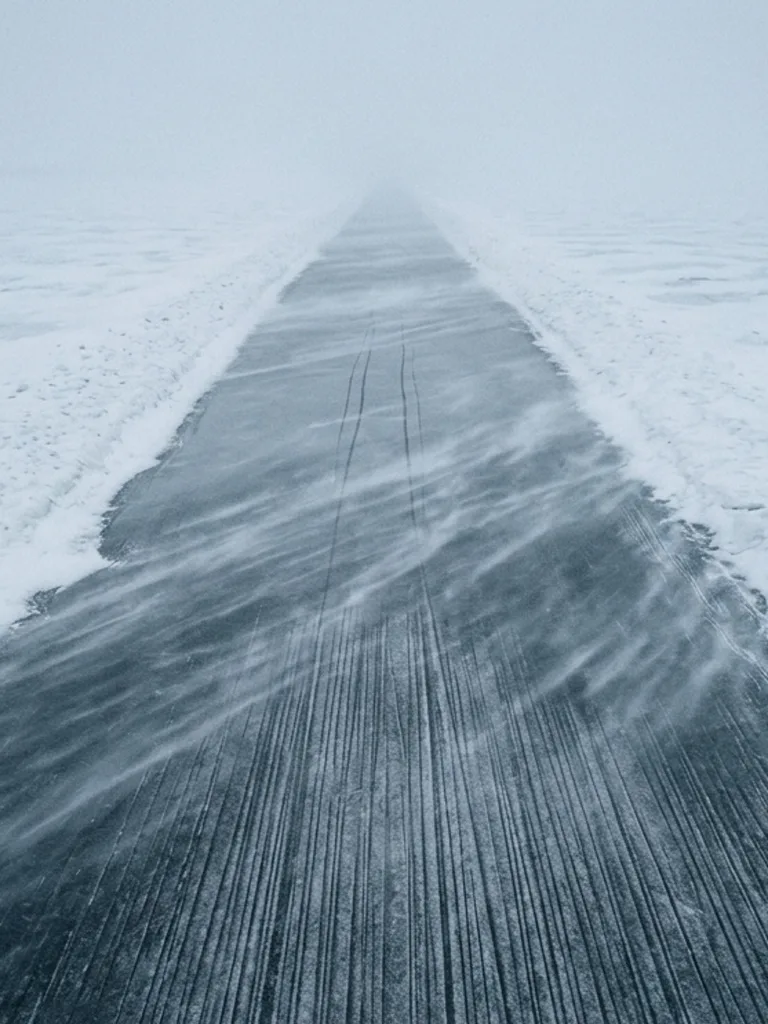
On 18 January 1963, still in the dark, 9,862 skaters took the start in Leeuwarden, capital of Friesland, the northern province of the Netherlands. 127 finished. The Elfstedentocht, a race across frozen canals whose name means 'the eleven cities tour', had just produced its most brutal edition, known ever since as the Hell of '63.
Of the 568 riders entered in the competitive race, 58 finished. Of the 9,294 who set off in the tour, the section open to anyone, 69 finished. That 69 is the number that stuck in people's memory, but the total who crossed the line that day was 127: one in every seventy-eight who had started.
Reinier Paping, a Dutch schoolteacher and skater, came in first after ten hours and fifty-nine minutes on the ice, into the wind and with frost stuck to his clothes. That morning's blizzard covered the markers laid out along the canals and cut visibility to a few metres. Some skaters lost their bearings and ended up far off the route; others suffered frostbite, falls or exhaustion, and the checkpoints pulled out anyone who could no longer go on safely.
The course links eleven Frisian towns through canals, lakes and short stretches of land where you have to walk with your skates on. It adds up to almost 200 kilometres, close to five marathons back to back, and it is not skated on a prepared rink: that whole network of water has to hold competitors, spectators, checkpoints and support crews for hours.
That is why the organising association requires fifteen centimetres of ice along the entire route. A well frozen canal in one town is no use at all if another stretch still has a thin layer. Inspectors drill the ice, compare measurements and keep watch on bridges, currents and the places where water takes longer to harden; the start is only announced when the whole route holds.
Nobody knows when the next one will be run, either. The first official edition was held in 1909 and, counting that one, it has been run only fifteen times in more than a century. It can come back after two winters or vanish for decades, because no calendar can order canals to freeze.
When the ice looks like it is approaching the necessary thickness, the whole of Friesland goes on alert. Routes are inspected, posts are prepared and thousands of people follow the weather bulletins. A mild week undoes the work of several nights of frost, and snow, even falling at low temperatures, acts as an insulator and slows the growth of the solid layer.
The last start was given on 4 January 1997. That day skaters crossed the eleven cities once more, but no later cold snap has left the ice fifteen centimetres thick from end to end. Twenty-nine winters have passed since that morning without a sixteenth Elfstedentocht.