 Margen
Did you know? · From the Margen catalogue
In 1957 they welded a lid over a nuclear shaft and it flew
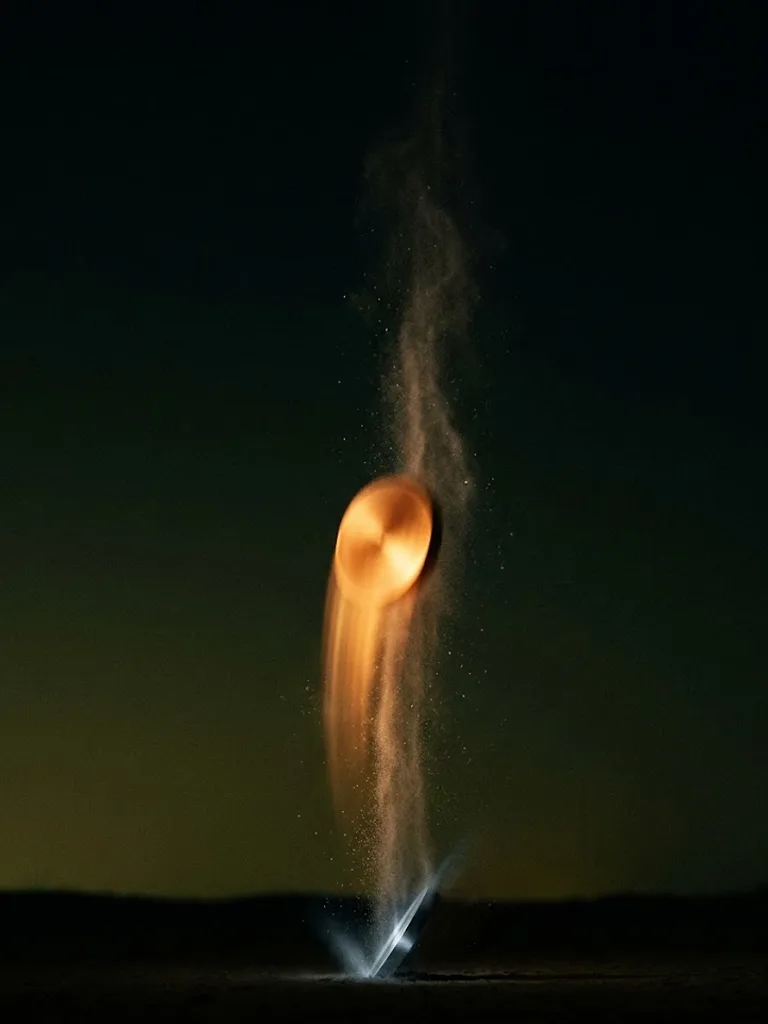
The lid closed the mouth of a shaft sunk in the Nevada desert, above a small nuclear charge: four inches of steel, ten centimetres, welded to the pipe. On 27 August 1957, in the test called Pascal-B, the charge went off and the lid disappeared. It was never found.
The physicist who had put it there was called Robert Brownlee and he worked for Los Alamos, the nuclear weapons laboratory in New Mexico. His job was to learn how to cap. That summer, in Operation Plumbbob —a series of almost thirty tests in Nevada—, underground shots were just beginning and nobody yet knew how to shut an explosion in below ground. The previous experiment in the series, Pascal-A, had been fired in an uncapped shaft, and a jet of fire came out of the mouth.
For the next one they gave it a lid, and before the shot Brownlee put on record what was going to happen to it: that the welded cap was bound to come off the hole. This was not a warning against the experiment; it was the experiment.
To see it, he asked for a high-speed camera aimed at the mouth of the shaft. When the film was developed, the lid appeared in a single frame. It was not in the one before, nor in the one after.
It is worth knowing what that frame proves and what it does not. It proves that the lid crossed the field of view between one image and the next, and nothing more. It is not a measurement of speed: nobody measured that lid. The figure repeated ever since —about six times the Earth's escape velocity, the speed at which something thrown from the ground no longer falls back, that is, some 66 kilometres per second— is a calculation of his, and he told it himself in a text written in 2002, forty-five years later. In that same text he wrote that his calculations settled nothing on this point.
Nor did he ever argue for the showiest version, the one in which that slab of steel was the first human object to reach space. He said the likeliest thing was that the air had slowed it, heated it and taken it apart in the first few kilometres, and that nothing was left of the lid but iron vapour over the desert. At that speed and at sea level, steel vaporises.
What the experiment did leave was an engineering conclusion, and that one is firm: capping the mouth of a shaft turns the cap into a projectile and contains nothing. What contains it is filling the shaft entirely. Later underground tests were sealed with a plug of alternating layers of sand, gravel and cement grout stacked along hundreds of metres, so that the gas and heat spend themselves pushing material.
Since then, test shafts are filled in rather than capped. The steel lid was used once.