 Margen
Did you know? · From the Margen catalogue
What drags the stones that cross a dry lake alone
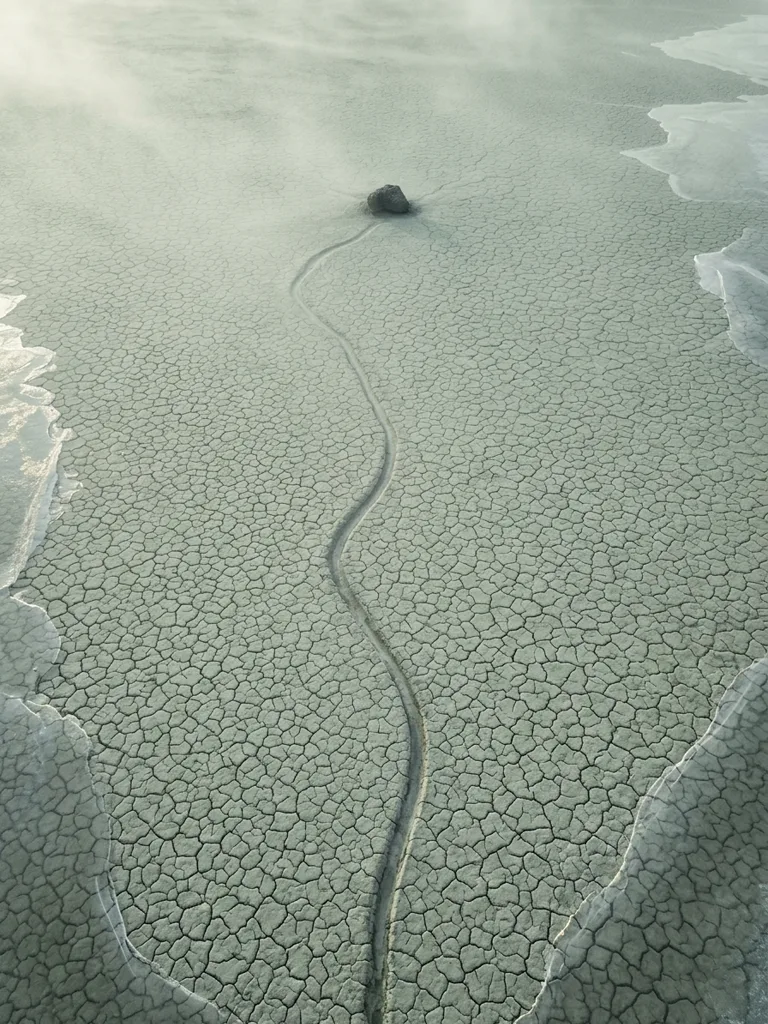
At Racetrack Playa, a dry lake in Death Valley, there are rocks weighing tens of kilos with a furrow hundreds of metres long behind them. The first geologists to measure them, in 1948, proposed wind eddies, slippery mud or sheets of ice. Not one of them ever saw a stone move, and that is how it stayed for sixty-six years.
Richard Norris, a geologist at the Scripps institute, and his cousin James installed fifteen GPS-fitted rocks in 2011, along with time-lapse cameras. In December 2013 they got lucky: it rained, a pond a few centimetres deep formed, it froze overnight, and by day the ice broke into panels three to six millimetres thick. A light wind, the kind that will not take your cap off, pushed the panels against the rocks, and the rocks moved between two and five metres a minute.
In other words: they move in plain sight, slowly, and for a few minutes a year. The work came out in PLOS ONE in August 2014, and one of the monitored rocks had travelled 224 metres.