 Margen
Did you know? · From the Margen catalogue
London doubled the width of its sewers and bought 150 years
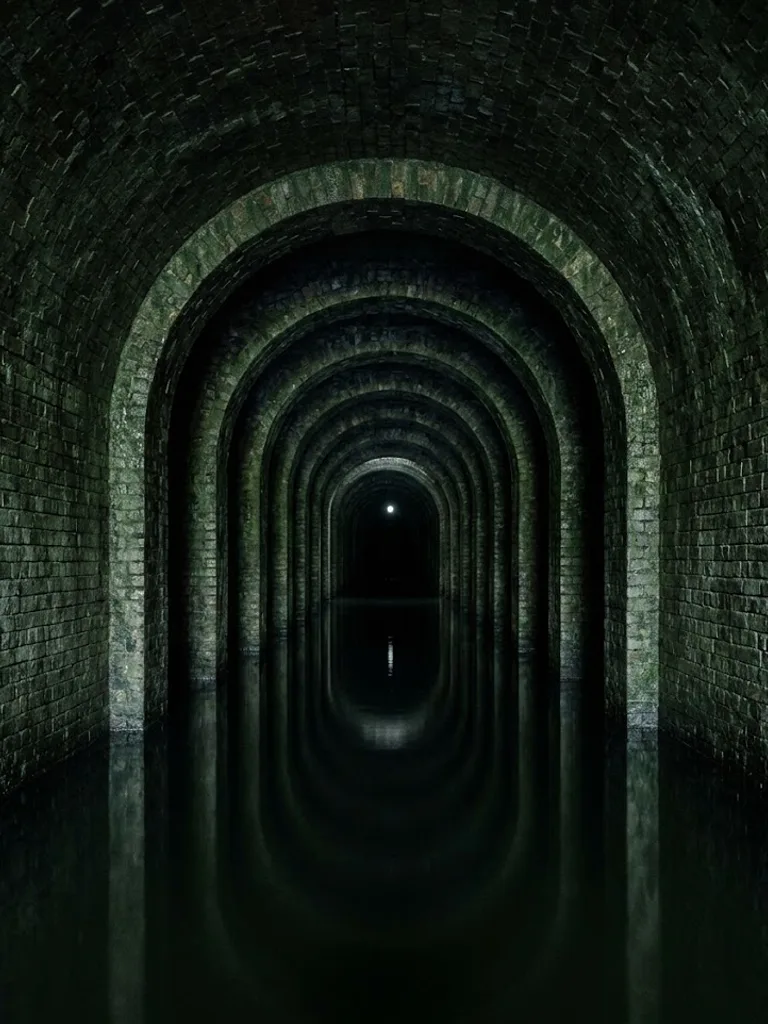
Joseph Bazalgette, chief engineer of the body that ran London's public works, worked out in 1859 how wide the city's sewers needed to be, and then doubled it. His reasoning fits on one line: you only do this once, and something you didn't foresee always turns up. That extra margin is why the system was still working a century and a half later, serving a city four times the size.
The works came out of the Great Stink of the summer of 1858. London emptied its waste straight into the Thames, the river that splits the city, and with the June heat the smell reached Parliament, which sits on the bank. They hung curtains soaked in chloride of lime, a disinfectant, and it did nothing. The bill that paid for the new sewer network was drafted and passed in eighteen days: it had been stuck for years over the cost.
Bazalgette laid out 132 kilometres of intercepting sewers that caught the water before the centre and carried it downriver, plus some 1,800 kilometres of street sewers. Along the way he built the Victoria, Albert and Chelsea embankments to house the pipes, and took ground back from the river in the process. The system opened in 1865 and was finished in 1875. London's last major cholera outbreak was in 1866, in an eastern district not yet connected.
Those same sewers are still in service today.