 Margen
Did you know? · From the Margen catalogue
456 children left Bordeaux and nobody signed for the return
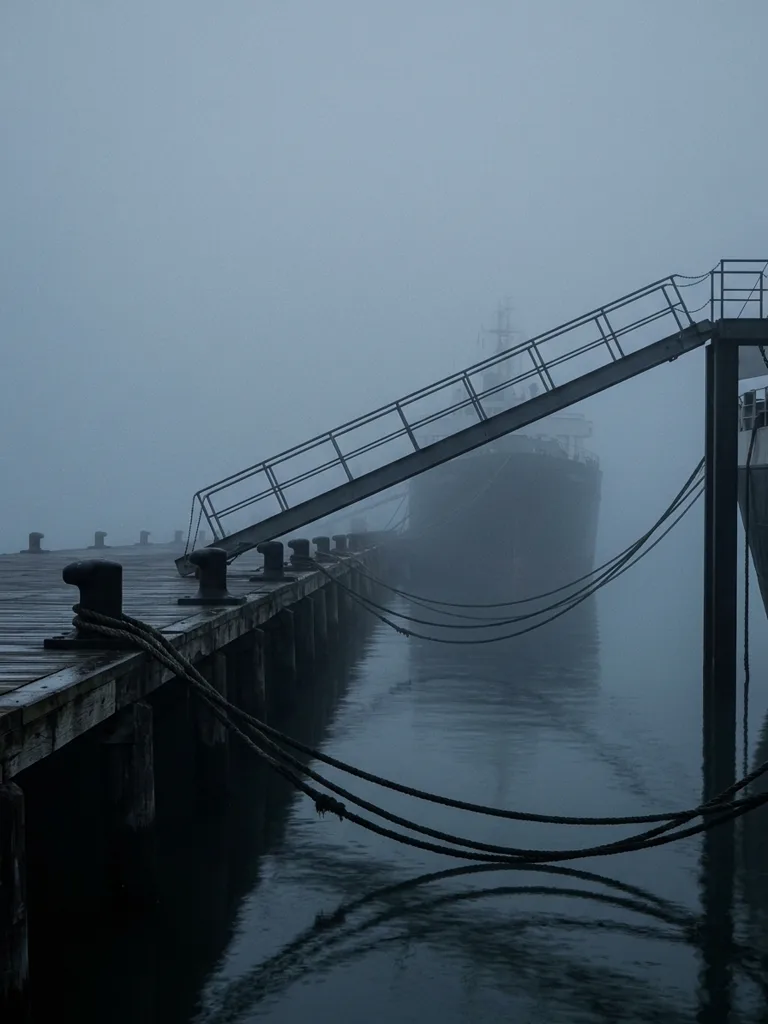
On the quay at Bordeaux, in late May 1937, 456 Spanish children walked up the gangway of the Mexique, a French liner on a regular route, with a cardboard tag hanging from their coats and a number written on it. The surviving lists wobble between 455 and 463 names, depending on who was added at the last minute. Some were four years old and some were sixteen, and hardly any of them travelled with an older brother who could read the whole ticket.
The initiative was Mexican. The government of Lázaro Cárdenas — president of Mexico from 1934 to 1940 — had decided to back the Spanish Republic to the end, and did so with a stubbornness that lasted forty years: Mexico did not recognise Franco's government while Franco was alive, and did not restore relations with Spain until March 1977, sixteen months after his death. In 1937 that support took the most concrete form available. The Committee for Aid to the Children of the Spanish People, chaired by Amalia Solórzano, Cárdenas's wife, offered to bring over a group of children of combatants and of evacuated families, give them schooling and send them back when the war was over.
The children set out from Madrid, from Valencia, from Barcelona, from Bilbao, with the port of Bilbao about to fall. They travelled first by train to the French border and from there to Bordeaux. On 7 June 1937 the Mexique docked at Veracruz and they came down the same gangway with the tag still on. A brass band was waiting for them, and a crowd, and speeches. The Mexican papers put their faces on the front page. There was a special train to Mexico City, kisses from ladies who were not their mothers, and an official reception.
And then they were put on another train, three hundred kilometres west, to Morelia, the capital of the state of Michoacán, which was Cárdenas's own state. A large building with courtyards and workshops had been fitted out there for the boys, and it was given a name that explained everything: Escuela Industrial España-México, the Spain-Mexico Industrial School. The girls were housed in a separate boarding school in the same city. Classroom in the morning and workshop in the afternoon: printing, carpentry, mechanics, dressmaking. The idea was that they would learn a trade while peace arrived.
The first months were almost good. The school was an industrial one, that is, designed for apprentices of twelve and up, and suddenly it had inside it children of four and five who needed someone to do up their coats. The older girls, the fifteen- and sixteen-year-olds, became the de facto carers of the little ones, without anyone asking them in writing or paying them for it. The food was not what they expected either: bread gave way to the maize tortilla, and the letters they wrote home contain more complaints about maize than about homesickness. They wrote a great deal, because the school gave them paper and stamps, and because everyone assumed the whole thing would be sorted out before Christmas. News of the war arrived in Mexican newspapers weeks late, and was read out to the youngest in the dining hall, summarised. Several of them kept the cardboard tag with their number for decades: it was the only document proving who they were and where they had come from.
The parents had signed an authorisation, and that authorisation was temporary: they were handing over their child for as long as the war lasted. The Mexican committee undertook to keep and educate them. But there was no treaty between the two states governing their return, no repatriation clause with deadlines, no reserved fund to pay for the passages home, no authority charged with claiming them back. The whole arrangement rested on a premise that in June 1937 still looked reasonable: that the Republic was going to win and that the sender would still be there to take delivery.
On 1 April 1939 the other side won. The state that had sent those children stopped existing. The Morelia committee found itself looking after 456 minors with no counterpart: there was no Spanish government to claim them — the new one was not going to deal with a committee it regarded as the enemy — and the families who had handed them over were broken into pieces. Fathers in prison, fathers killed at the front, fathers crossing the Pyrenees towards the camps at Argelès and Saint-Cyprien, mothers who had changed address and convenient surname three times over. Many letters left Morelia and found nobody at the address written on them. Others found someone who could not pay for a transatlantic passage, and in 1939 a transatlantic passage cost several months' wages.
The school's budget depended on donations and on allocations that kept narrowing, especially once Cárdenas left the presidency in 1940. The directorship changed hands several times in a few years, and with each change the rules, the timetables and the treatment moved too. There were complaints of harsh discipline and of neglect. There were escapes: fourteen- and fifteen-year-olds who jumped the railings and went off to look for work in Mexico City or up north. And there was a Mexican press that in the 1940s turned the affair into a scandal and wrote about "the wild children of Morelia", a label some of them dragged around for years when applying for jobs. The boarding school emptied by arithmetic as much as by neglect: a child who arrived aged seven in 1937 turned fifteen in 1945, and at fifteen a workshop apprentice went out to work. Those who stayed to the end walked out of it as young adults, with a trade in their hands and no house to go back to.
A few returned to Spain in the following years, when an aunt or a surviving father managed to find the money and the papers. Others were reunited with their parents without leaving Mexico, because Mexico ended up taking in tens of thousands of Spanish republicans in the 1940s and some of the missing families arrived in that flow. Others never found anyone at all and stayed, married in Michoacán or in the Federal District, worked as mechanics, teachers, printers, bookkeepers, and raised Mexican children who spoke with a Mexican accent and heard words from Bilbao at home.
Several took Mexican nationality because it was the shortest route and also the only one: a minor who had left Spain with a 1937 authorisation signed by a father untraceable since 1939 had no way of proving who he was to two bureaucracies that refused to speak to one another, and there was no Spanish consulate in Mexico that was any use to them. And those who did get a passage to Spain in the 1940s and 1950s arrived in a country where their own file — having been sent abroad by the committee of a defeated republic — was a record best left unmentioned when looking for work.
For sixty years, at their own reunions, they called themselves the children of Morelia. They never changed the noun, even at seventy and with grandchildren. One of them, Emeterio Payá Valera, wrote the book that tells it best from the inside, without heroics and without administrative bitterness. The historian Dolores Pla Brugat, of Mexico's National Institute of Anthropology and History, later reconstructed the whole file: the lists, the budgets, the committee minutes, the school reports, the returned letters.
In the committee's papers, the 1937 group is described as the first expedition. More were planned: there was talk of bringing over several thousand children in successive batches, and Morelia was only the first school in a network. The Mexique made the Bordeaux-Veracruz crossing again in the summer of 1939, this time with some two thousand adult republicans, and that ship was followed by others. Of children there was no second expedition, and the word "first" stayed printed in the documents for eighty-nine years with nothing ever coming after it.