 Margen
Did you know? · From the Margen catalogue
Canada and Denmark left each other liquor on an island for 38 years
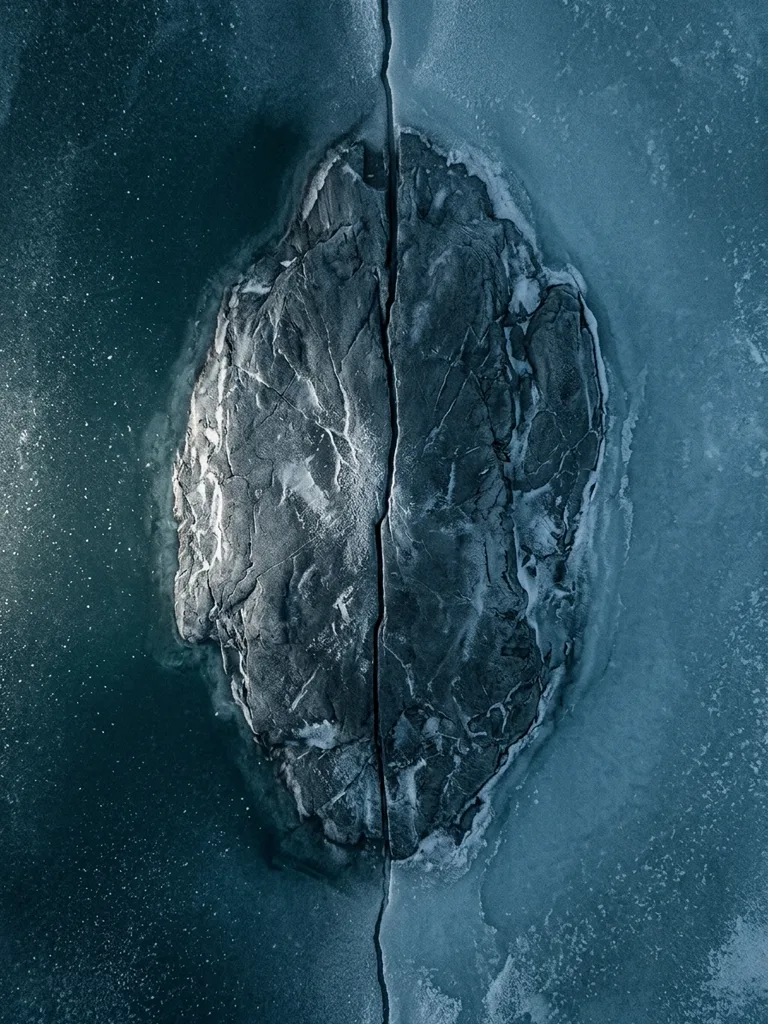
Tom Høyem, Denmark's minister for Greenland, landed by helicopter in 1984 on a bare crag in the Nares Strait, the frozen arm of sea that separates Canada from Greenland. He planted a flag, left a bottle of schnapps and a handwritten note: "Welcome to the Danish island." That was the start of a thirty-eight-year dispute in which the two countries took turns swapping flags and bottles over 1.3 square kilometres of rock.
The island is called Hans — Tartupaluk in Greenlandic — and would fit inside a mid-sized airport. It has no fresh water, no tree and no inhabitant. In 1973, when Canada and Denmark signed their maritime boundary, the negotiators drew the line up to the shore, broke it off for 875 metres and picked it up again on the other side. They left the island unshared.
From then on, every expedition that climbed up took down the neighbour's flag, planted its own and left a bottle. The Danes brought schnapps; the Canadians, whisky. The press called it "the whisky war": thirty-eight years without a shot, without an injury and without a single court case. The worst thing that happened was in 2005, when the Canadian defence minister, Bill Graham, came ashore on a visit and Copenhagen replied with a note of protest.
On 14 June 2022, Mélanie Joly and Jeppe Kofod, the foreign ministers of Canada and Denmark, signed the split in Ottawa: the island is cut almost in half along a natural cleft. Canada, which until that day had a land border only with the United States, gained the second one in its history.