 Margen
Short story · From the Margen catalogue
Quique put Nerea in the falla and it burns at 22:00
Quique had the ladder propped against the side of the falla when Nerea came into the clubhouse to ask for change. It was 19 March, five past one in the afternoon, and I was behind the bar washing glasses with the radio on.
Ours is one of the small committees. That year we could not afford a proper artist: the workshop quoted 4,300 euros and there was 1,100 in the till, counting the 180 from the ham raffle. So Quique built the falla himself. Quique Peiró, 24, carpenter’s apprentice at a workshop in Alboraia, who spent five months gluing cork in his grandmother’s yard and painting it with whatever was left over at work. Eight figures, six metres and a bit, raised on the 15th on the corner, with its board and its little booklet photocopied at the stationer’s downstairs.
Nerea Blasco is a lab technician and she was leaving the next day for Rotterdam, on a two-year contract at a water-testing company. She and Quique had known each other since they were nine: school, the children’s committee, the two o’clock firecracker show every day in March from the age they were allowed to go on their own. I turned up much later, when I started serving at the bar to pay my tuition.
She took the change, went out for a smoke and came back in with the cigarette unlit.
—Hugo. Come and see something.
On the third tier, round the back, where the falla faces the inner courtyard and nobody looks at it, there was a cork girl with a wheeled suitcase and a boarding pass in her hand. Her hair was pinned up with a biro, which is something Nerea has done since she was fourteen, and they had painted a mole under her left eye. Below it, nailed to a little board, there was a hand-written quatrain in Valencian:
Ella se'n va a arreglar l'aigua del món, que ací ja no li queda res per fer. Ell es queda arreglant la falla del barri i enguany l'ha feta ell, que ningú li ho ha pagat.
She is off to fix the water of the world, because there is nothing left for her to do here. He stays behind fixing the neighbourhood falla, and this year he built it himself, and nobody paid him a cent for it.
—I want that gone before ten —she said.
At ten all the fallas in València burn. Ours at ten sharp, with the fire crew on the corner and half the neighbourhood holding up a phone. There were nine hours left.
Quique came down the ladder with the brush in his hand and listened to the whole sentence without cutting in. Nerea asked him to take it off. He said no.
—Nobody sees it, Nerea. It is facing the wall.
—My father sees it, and he gets here at eight. And Amparo sees it, and your mother sees it, and anyone taking the rubbish out sees it.
—Then somebody does see it.
He went inside to get the committee’s lunch ready and said nothing else for three hours. At two we went up to the firecracker show like every day, the two of them together, in the same spot as always, the kerb in front of the chemist’s, and they did not speak. I stayed in the middle, which is where I have always stayed.
At half past four Nerea went to find Vicent Gascó, electrician, chairman of the committee for the last eleven years, the man who signs the papers and who every March has the council’s deposit riding on it. She explained the figure to him. Vicent took his cap off and put it back on.
—And what do you want me to do?
—Take it down.
—The figure is glued to the tier. To get it out you have to open the whole third tier, and the third tier is what holds the banner up. If I open that, the falla comes down on me at six in the evening and I lose the deposit. —He sat down on a plastic chair and started looking at his hands—. And the booklet has been printed since the 10th. It is in two hundred houses.
—Then make him change the verse.
—The verse is his. I do not tell anybody what to put under their own figure. That is the only thing we have.
What I saw from the bar was the neighbourhood finding out on its own. Amparo, from the third floor, came down to put the cardboard out, stopped in the courtyard and laughed with her hand over her mouth. Half an hour later Quique’s mother came to the clubhouse to ask me whether it was true. I said it was. She ordered a coffee with brandy, 1.50, drank it standing up and left without an opinion.
Nerea left the clubhouse at a quarter to five and did not show up again until seven. She came with her father and with the real suitcase, the grey one with wheels, and we weighed it on the bar scales because she was afraid of going over: 22.8 kilos, and the limit was 23. Her flight left Manises at twenty to seven the next morning. Nobody at the clubhouse said a word to her about the figure, and by then the whole building knew.
At eight they burned the children’s falla, which was a cat on a scooter and was built by Vicent’s twelve-year-old daughter. By twenty past nine the street was already full. The barrier was up, the façades had been hosed down and the fire crew were smoking next to the engine.
At half past nine Nerea crossed the barrier on the courtyard side with her phone torch on. I saw her from the bar, because from the bar you can see that stretch of pavement and nothing else. I thought she was going to tear the figure off with her hands.
What happened is that she stayed still, crouched down, looking up at the cork suitcase from below.
The suitcase was open on the side that faced the wall. That is why Quique had set it facing that way. Inside, painted small with a single-hair brush, was the neighbourhood: the clubhouse with its shutter half up, the bar with a bloke in an apron who was me, the church tower, the chemist’s, the kerb where we watch the firecrackers, the cat on the scooter. And in one corner, kneeling, a lad with a tin of glue, seen from behind, in a T-shirt I have seen him wear two hundred times.
The clubhouse shutter was painted at the exact height it stops at when it jams, a hand’s width crooked. In the chemist’s window there was a green cross two millimetres wide with the tube inside gone over in white. And on the firecracker kerb there were two figures: a girl with a finger in her ear and a lad next to her looking at her instead of looking up.
Nerea switched the torch off and stayed sitting on the courtyard floor.
Six or seven minutes later she crossed back over the barrier, went to stand next to Vicent and told him to leave it.
—Leave it?
—Leave it.
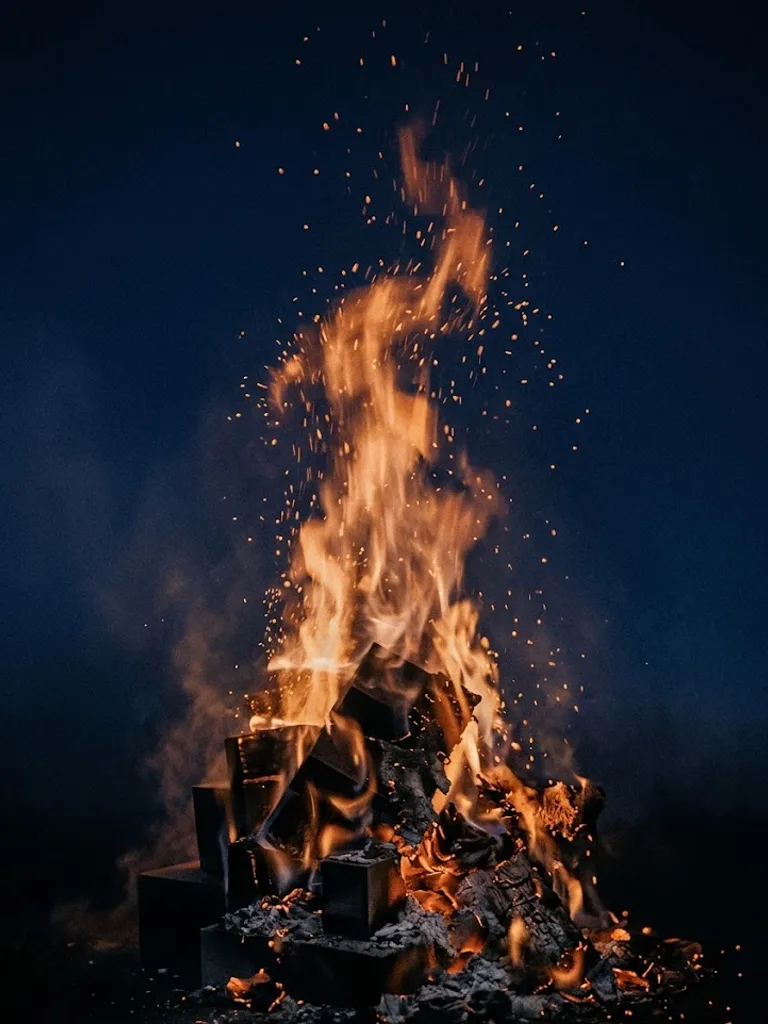
At ten sharp they lit it from the base, the way it is done, and the third tier took longer than usual to come down because Quique had built it with real battens and not with the stuff they hand you at the workshop. The last thing anyone saw was the suitcase, which swung fully open in the heat and spent a couple of seconds showing the whole street the neighbourhood before it went to the ground. A lot of people took a photo.
By twenty past ten the street smelled of burnt cardboard and the fire crew were already hosing the asphalt. Vicent brought out the plastic chairs from the clubhouse so the older ones could sit and watch the pile burn itself out, and Quique’s mother took the first one.
At twenty past midnight I was closing the bar and Quique was sweeping the ash off the pavement with the big broom, on his own, the way he does every year. Nerea had changed clothes and had her jacket on because her father was double-parked outside.
—Why did you put the neighbourhood inside the suitcase? —she asked him.
Quique kept sweeping for a while before he answered.
—So it would weigh something.