 Margen
Did you know? · From the Margen catalogue
In 1902 some 28,000 people died and the prisoner lived
Ludger Sylbaris was charging admission in 1903, under the Barnum & Bailey circus tent, for showing the burns on his back: they billed him as the prisoner who came out alive from a city with 28,000 dead. For once, a circus poster was understating things.
A year earlier, on 12 May 1902, rescuers shifting rubble in Saint-Pierre —the richest city in Martinique, a French colony in the Caribbean— heard a voice under the stone. Sylbaris had been shut in for four days, burned and without water. He was in jail after a tavern brawl and had been given the punishment cell: a half-buried stone cubicle with a single narrow slit, its back to the volcano.
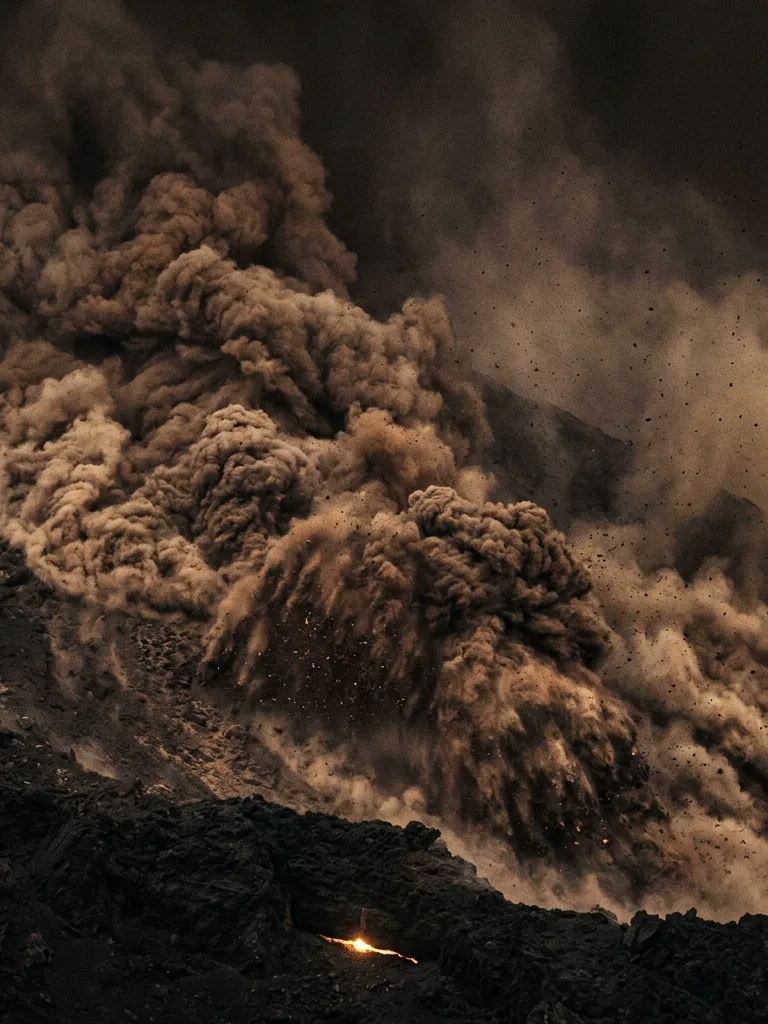
Four days before that, at 8:02 on the morning of 8 May, the volcano Mont Pelée had released a burning cloud —gas and ash at around 1,000 degrees— that covered the six kilometres down to the harbour in under a minute. It took almost the entire city with it, and eighteen ships anchored in the bay.
The day before, on 7 May, a commission appointed by the governor had signed off that there was no immediate danger. The elections were on the 11th and it suited nobody for people to leave. Governor Louis Mouttet stayed in Saint-Pierre to set an example and died with everyone else.
Sylbaris was pardoned and ended up crossing the Atlantic as a fairground attraction. His cell is still standing on the hillside: it is the only thing left whole on that street.