 Margen
Did you know? · From the Margen catalogue
Centralia has burned under its houses since 27 May 1962
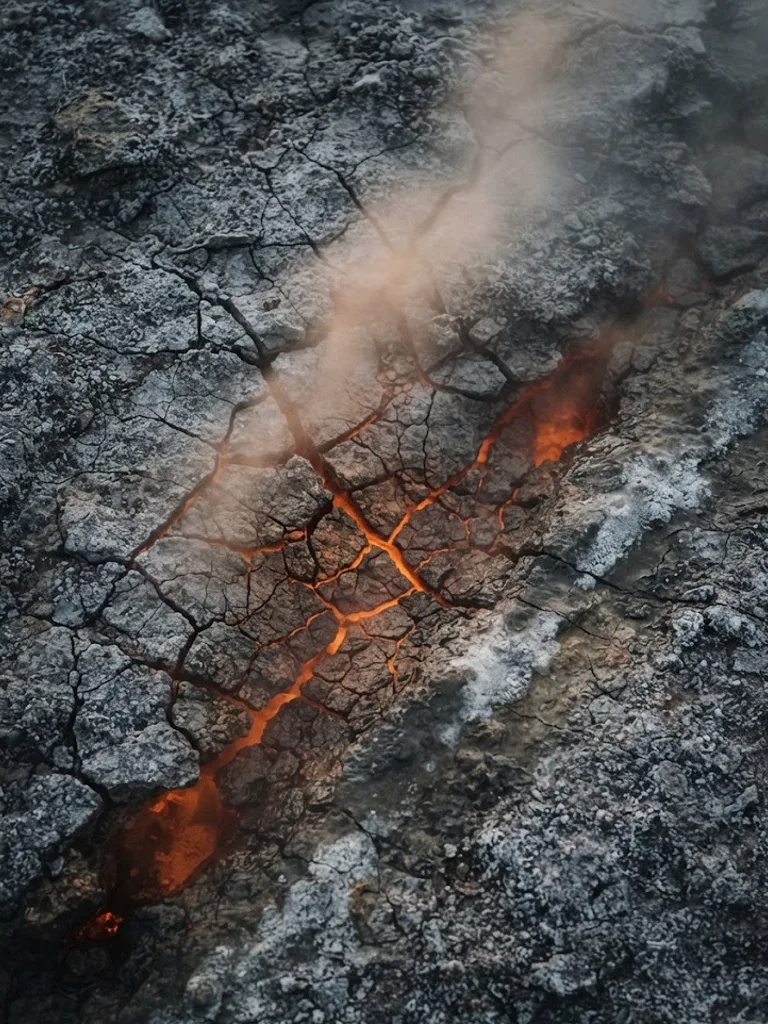
Centralia, a mining town in Pennsylvania, burned its rubbish on 27 May 1962 in an open pit inside an abandoned coal mine. It was the municipal chore of every year before the Memorial Day parade: set fire to the waste and leave the dump clean. The firefighters put out what they could see, but the fire had found an opening beneath the pit and had reached the anthracite, a hard, very dense coal; sixty-four years later it is still burning under the town.
The fire moved through old galleries, cracks and pockets of coal with no front that was easy to locate. The ground gave off hot gases, some roads cracked open and certain cellars filled with carbon monoxide, a toxic gas with no smell and no colour. There were attempts to dig barriers, flood areas and dig out burning material, but none of them isolated the whole fire. Under the houses there were too many mine workings and too many points where the heat could come back up.
For years the town went on working on top of that combustion. In the 1980 census Centralia had 1,017 inhabitants, with its houses, its shops, its churches and its paved streets. In the 2020 census there were five people left.
On 14 February 1981, Todd Domboski, a twelve-year-old local boy, was crossing his grandmother's yard when a sinkhole opened under his feet, a hole made by ground giving way. He fell and managed to grab a tree root. His cousin Eric Wolfgang, fourteen, pulled him out. Hot gases from the fire were coming out of the hole.
In 1984 the United States Congress approved 42 million dollars for relocation. The money was not shared out per head: it was there to buy houses and businesses voluntarily, demolish them and pay for the moves. Many families agreed to sell and leave, the houses were knocked down and the plots were left under grass. In 1992 Pennsylvania condemned the entire borough. Some residents appealed the measure and refused to abandon their homes.
In 2002 the postal service withdrew the 17927 ZIP code. Maps could still show the name, but the façades, the letterboxes and the junctions that used to give the streets their meaning were gone. A closed stretch of Route 61, the state road that ran through the area, filled up with graffiti and ended up with the nickname Graffiti Highway. In April 2020 it was covered with mounds of earth to keep visitors away.
The few who are left live there under agreements that allow them to stay until they die. Around them, the fire keeps breathing through cracks that move about. There is no continuous flame under every metre of the town: there are zones of burning coal that advance slowly along the seam and can feed new hot spots.
The calculations published in 2006 gave the fire coal enough for another two hundred and fifty years.