 Margen
The Great Pyramid of Giza — 2.3 million blocks, 146 metres — went up for the pharaoh Khufu in about twenty years, as Egyptologists broadly agree from the work gangs' graffiti and from a foreman's logbook found by the Red Sea.
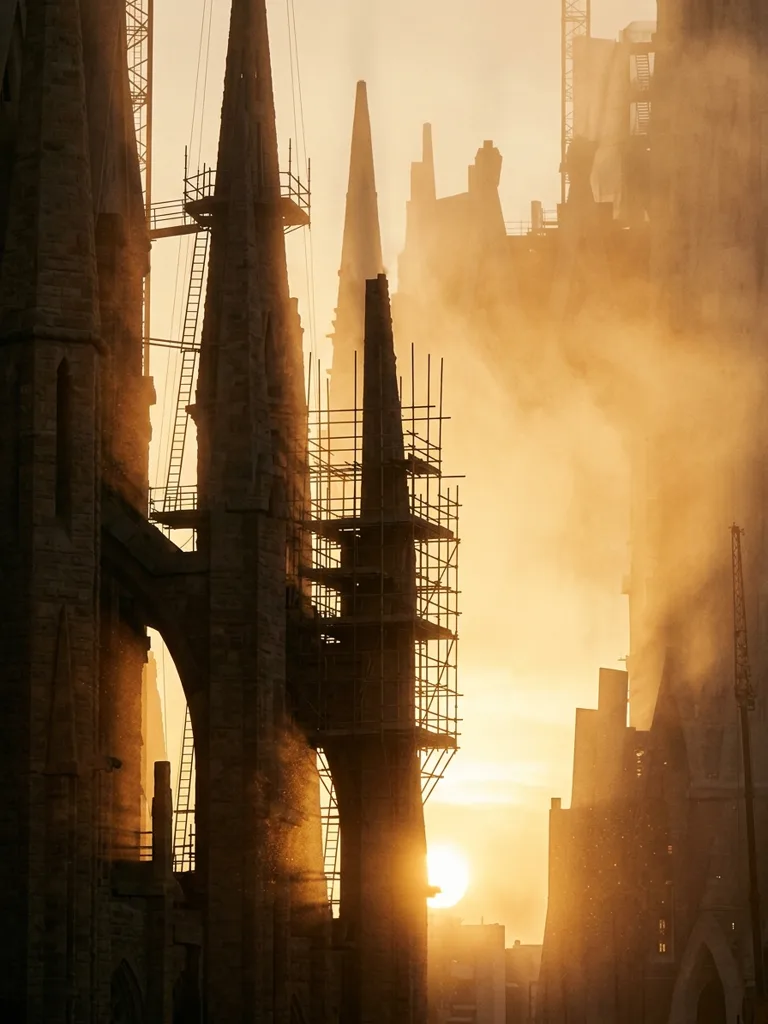
The first stone of the Sagrada Família was laid in 1882. Antoni Gaudí took over the commission a year later, at 31, and gave it the rest of his life knowing he would never see it finished. When anyone complained about the pace, he would answer: 'My client is not in a hurry.' His client, he explained, was God.
The arithmetic is striking: more than 140 years of building work, some seven times longer than the pyramid took, with concrete, cranes and computers on hand. But the difference isn't muscle; it's method. Khufu had an entire state bent to his tomb; the basilica has always lived on donations, and in 1936 a fire in Gaudí's workshop destroyed a good part of his plans and models, which had to be rebuilt piece by piece.
Twenty years were enough for a pharaoh's eternity. A century and a half has not yet been enough for an architect's patience.