 Margen
Did you know? · From the Margen catalogue
Nineveh falls in 612 BC and the fire keeps its library
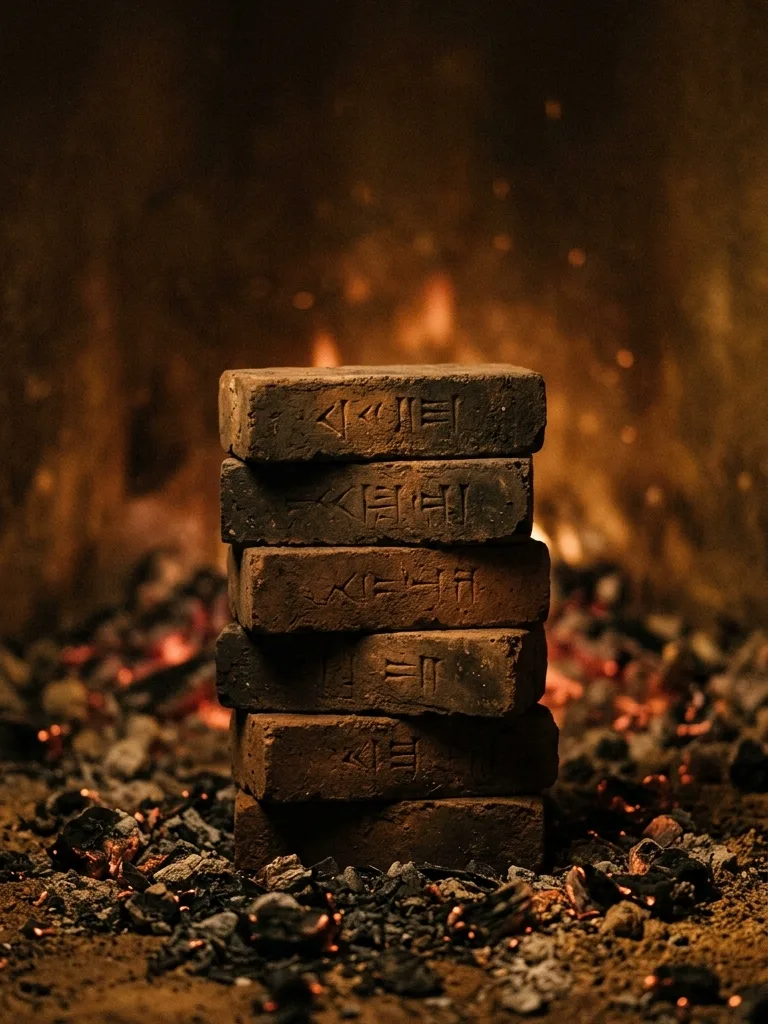
In 612 BC a coalition of Medes and Babylonians entered Nineveh and torched the palaces. Under those roofs sat an archive of almost thirty thousand clay tablets ordered copied by Ashurbanipal, the last great king of Assyria, for his own reading. The clay was still soft: the scribes pressed wedges with reed styluses and simply air-dried the bricks. None had been kiln-fired.
The fire brought down the walls. It also baked the tablets. The bricks would take two and a half millennia to see the light again.
When in 1853 Hormuzd Rassam, an Iraqi Assyriologist working for the British Museum, dug into the mound of Kuyunjik and pulled out fire-hardened bricks with the wedges still legible, he found among them the eleventh tablet of the Epic of Gilgamesh: the flood story that would later read like a mirror of Genesis. Alongside it, catalogues, ambassadors' letters, astronomical omens, king-lists spanning fifteen hundred years. Ashurbanipal's library is the reason we can read Akkadian today: without it, much of the Mesopotamian vocabulary would have stayed as mute signs on isolated stones.
The image holds: the enemy's fire baked the king's archive. Without that blaze, the clay would have stayed soft, exposed to the centuries, and returned to mud. They read better today than the year they were written.